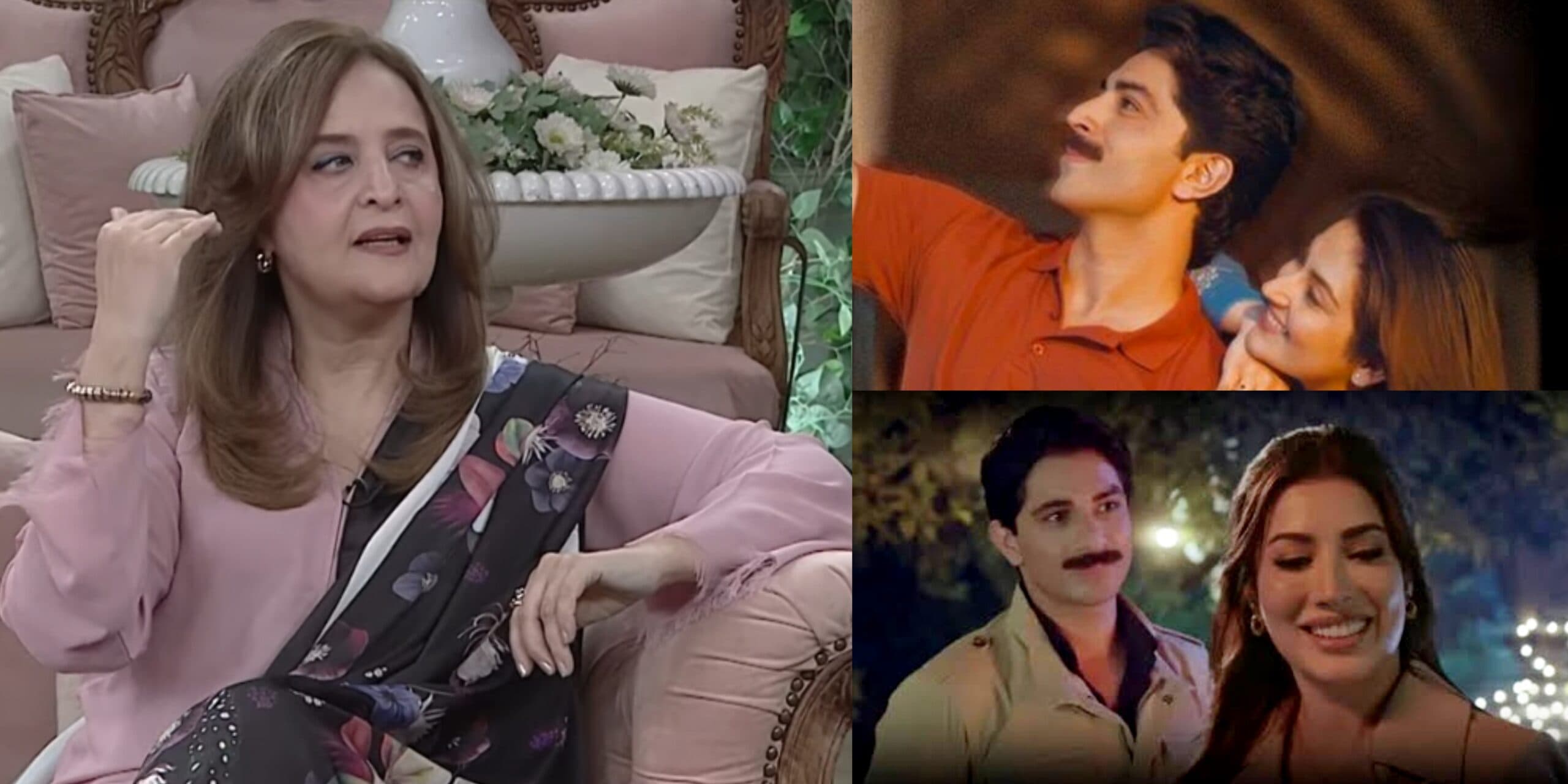
Actor Ainy Jaffri holds the view that love and compassion, not criticism or judgement, drive real change in people's behaviour.
Drawing on the message of Dar-e-Nijaat, she stressed that people should voice disagreements respectfully and give others room to question ideas without feeling attacked.
In a recent interview, Jaffri unpacked the lessons behind the drama and shared her thoughts on religious interpretations, women's clothing, marriage and personal freedom.
Explaining what she believes viewers can take from Dar-e-Nijaat, the actor said:
"What you can learn from the show is that you can change someone with love. That's the only way you can change someone."
She also addressed how people should handle disagreements over others' choices. "I think what it teaches us is that we shouldn't offend each other. If you don't like what someone is wearing or doing, there's a certain way to go about things. You would say it lovingly, as Abu Bakr or his mom does," she said.
A major part of the conversation centred on women's clothing, modesty and the scrutiny women face over their appearance.
Jaffri questioned why society so often directs its frustrations at women.
"People don't know where to take out their frustration, so people go on the softer gender and put it on them and what they are wearing"
She also cited the Quranic instruction for men to lower their gaze, asking why the responsibility for modesty so often lands on women. "People forget that it says in Quran to lower your gaze."
Voicing her frustration with the fixation on women's clothing, she added: "Why are people so concerned? You know when people question clothing, I don't understand it."
The discussion then moved to the hijab, religious interpretations and how much family or society should shape personal choices.
Jaffri recalled hearing different women's perspectives on wearing the hijab and raised questions about Austria's restrictions on headscarves for girls under 14. She said she wanted to understand the reasoning behind such laws, especially where age, personal choice and parental influence come into play.
At the same time, she acknowledged that parents naturally pass their cultural values and beliefs on to their children.
Recalling an encounter with a young girl from Lebanon who wore the hijab and said God had told her to wear it, Jaffri questioned how society understands the relationship between faith, modesty and individual choice. "I'm just saying don't say it's about modesty," she said.
She also questioned whether expectations surrounding modesty extended beyond covering one's hair. "Is makeup part of it, or is it just the hair?"
Jaffri maintained that asking questions does not necessarily mean rejecting another person's beliefs. "I think it's okay to question. I'm allowed to ask questions."
She added that her outlook had evolved with age, leaving her with more questions rather than definitive answers. "The older I get, I have more questions, less answers."
On disagreements, Jaffri recalled a conversation with a cousin in which they held different opinions.
She questioned why differences of opinion so often lead people to condemn one another or assume the authority to decide who is right, who is wrong and what punishment someone deserves.
She also spoke about her approach to social media, saying she welcomes comments from followers and takes the time to read their opinions. "I welcome comments in the limelight and read followers' opinions and what they say."
She said engaging with different perspectives can offer opportunities to learn and reconsider one's understanding of certain issues. "You can learn some nice things and understand different points of views."
Explaining why she brought up the Austrian law during the interview, Jaffri said living in Europe made her curious about the reasoning behind certain laws and the ideas that inform them.
However, she stressed that insulting people or using abusive language does not effectively educate them or encourage meaningful discussion.
"Giving people curse words and telling them how to go about things is not how you will teach someone or learn anything"
The conversation also touched on marriage, relationships and the religious provisions surrounding polygamy.
Jaffri questioned how introducing another person into a marriage would affect a relationship built on mutual understanding and an agreement to remain monogamous. "If you are married and have an understanding that this is a monogamous relationship where it is just us, then what will happen if another person comes in?"
Discussing the conditions surrounding polygamy in Islam, she highlighted the responsibility of treating multiple wives equally, questioning whether such expectations could realistically be fulfilled. "If Islam says you have four wives, you have to treat them equally and love them equally."
She further suggested that historical circumstances, including war and the need to provide women with shelter and financial support, are important considerations when discussing the subject. She also questioned how marriage had evolved across different societies, including its historical connections with family structures, property and assets in Western societies.
Addressing interpretations of Islamic teachings, particularly in discussions involving underage marriages, she criticised patriarchal understandings of religion and argued against using religious teachings to justify harmful practices. "People have bad interpretations and patriarchal ways of understanding Islam."
Throughout the interview, Jaffri returned to the importance of approaching people with understanding rather than making them feel small for holding different opinions or making choices others might not agree with.
For her, kindness does not mean agreeing with everyone. Rather, it means recognising that meaningful conversations require patience, compassion and a willingness to listen, even when perspectives differ.