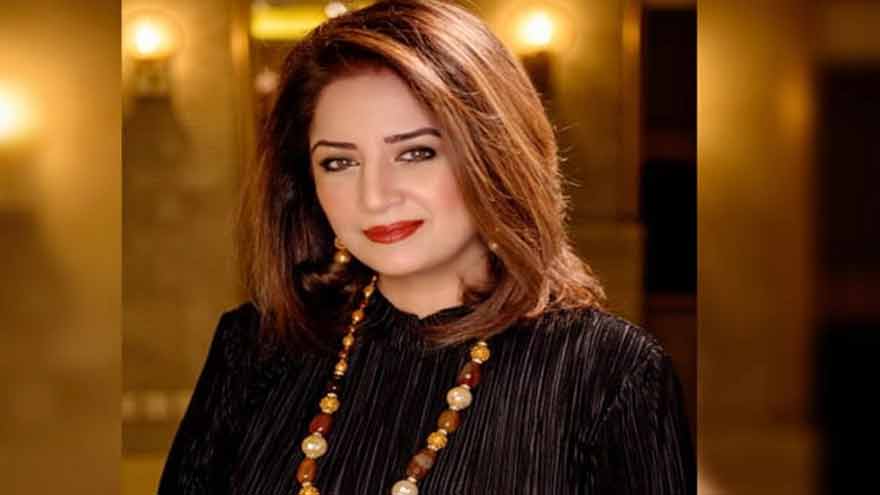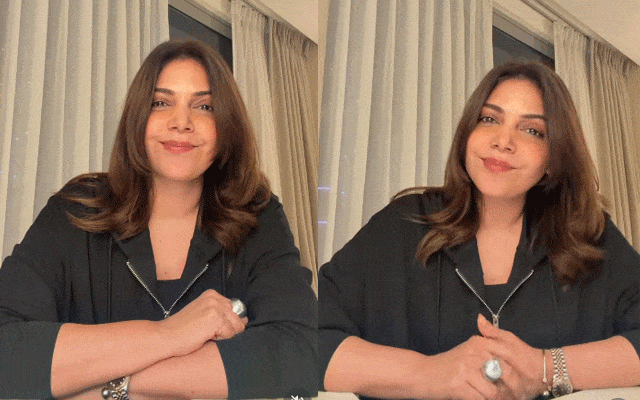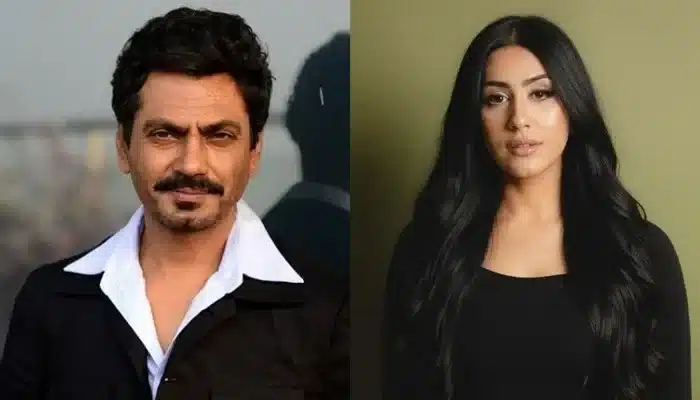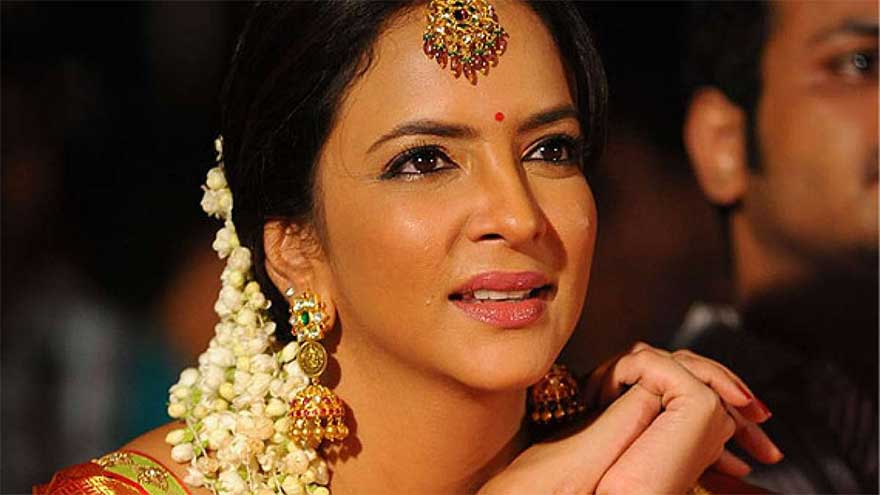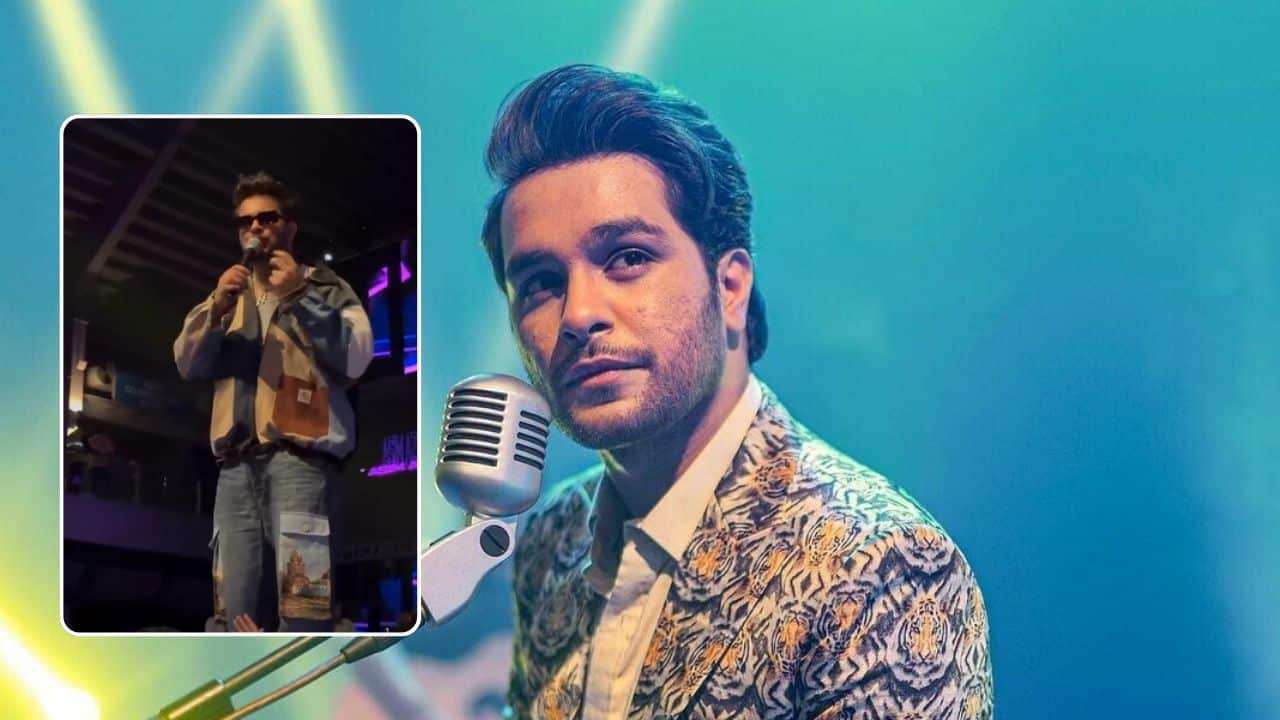
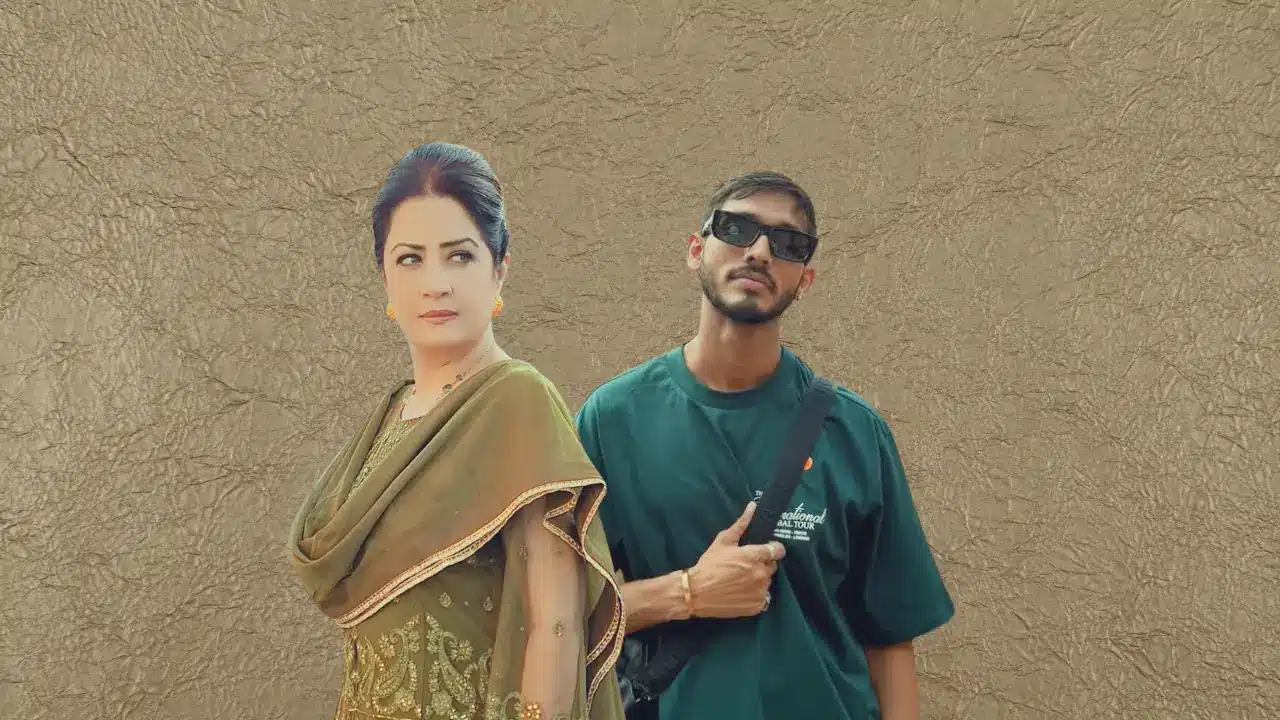
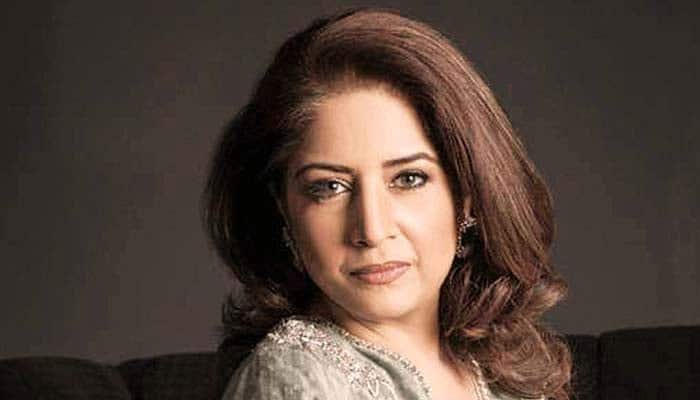
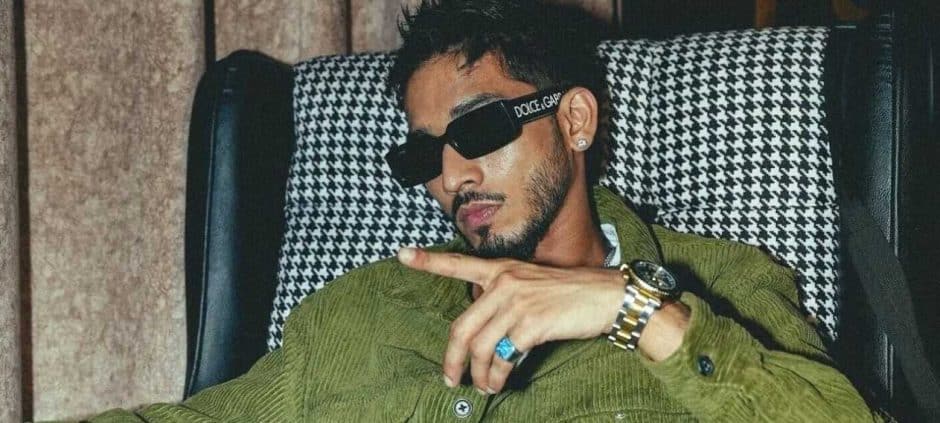
Atiqa Odho thinks art shouldn’t be limited by borders, but self-respect matters too — and she’s sharing her thoughts on the controversy where rapper Talha Anjum draped an Indian flag over his shoulders at a Kathmandu concert last November.
Odho was a guest on The Current Podcast when host Ismaeel Qasim asked about the incident. She said she’s “really torn” because it involves two things she believes in: agreeing with Anjum’s view that “art has no borders,” but also thinking “you have to treat others how they treat you.”
She complained that politics gets in the way of art. She said Indian celebrities who visit Pakistan are “treated like royalty” and get lots of love and respect, but “they won’t let our films play in their cinemas.”
“It has to be a two-way relationship,” she stressed several times during the interview.
As a former head of Pakistan’s United Producers Association (UPA), Odho said the group banned Indian films in Pakistan as a tit-for-tat move — because “cultural exchange can’t be one-sided.” She regretted that a great film like Maula Jatt didn’t get shown in India due to politics.
She recalled a time when she was UPA chair: India’s film association said they’d fine any producer 5 million INR (to go to the Indian Army’s welfare fund) for hiring Pakistanis. Back then, Pakistani actors like Fawad Khan and Mahira Khan were working in Bollywood. Odho said this move sent a terrible message — that Pakistani artists are like terrorists, and they have to “pay for the right” to work there.
She explained why India does this: Pakistani content on Indian screens “breaks their story that Pakistan only makes suicide bombers” — because it shows people there that Pakistan has art and culture too.
Odho said both countries have so much talent. “If our musicians, actors, and filmmakers work together, we could take the world by storm,” she said. She hopes things open up again someday, but “it has to be a two-way street.”
When the host noted that Indian fans love Pakistani artists (even if the Indian government doesn’t), Odho agreed: “We have lots of fans in India, and we want to make them happy. But people here reacting the way they are — it’s understandable given the current situation.” She added that Anjum made a choice and “will have to face the consequences.”
Earlier in the show, the host asked about a TV segment where host Rehan Tariq shamed TikTok creator Warda Malik for her content. Odho said everyone has the right to post what they want (as long as it’s legal) — “none of us are morality police.”
“If you find something really offensive, there are proper ways to handle it,” she said. “Government agencies and social media platforms have rules to take down or ban things.” She added that no one is perfect, and people have different ideas of what’s moral. She pointed to a recent case where a woman posted videos of animal abuse — and authorities stepped in, as they should. “These news anchors who humiliate people to act like morality police? They’re just trying to get more views,” she said.
Read more: Shootings Banned at Lahore Schools After Main Manto Nahin Hoon Row: Atiqa Odho