Entertainment
Aamir Khan Contacted Sarwat Gilani After Churails But Moin Akhtar’s Loose Talk Was the Real Reason
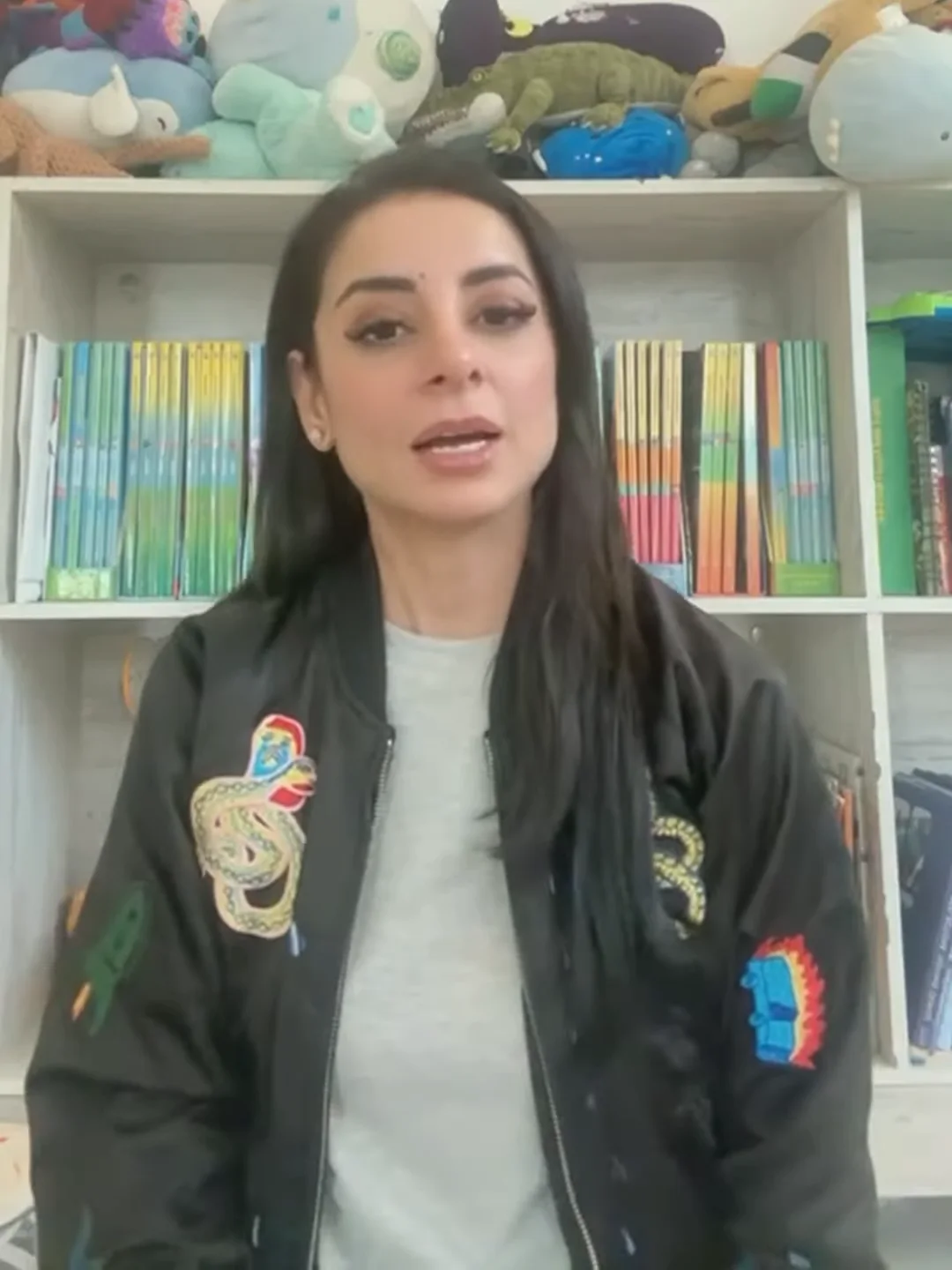
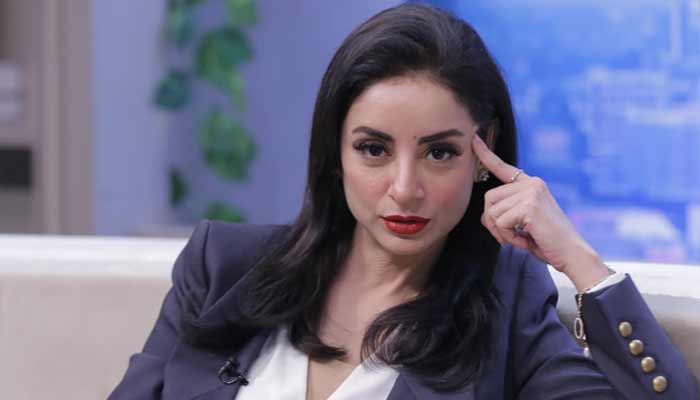
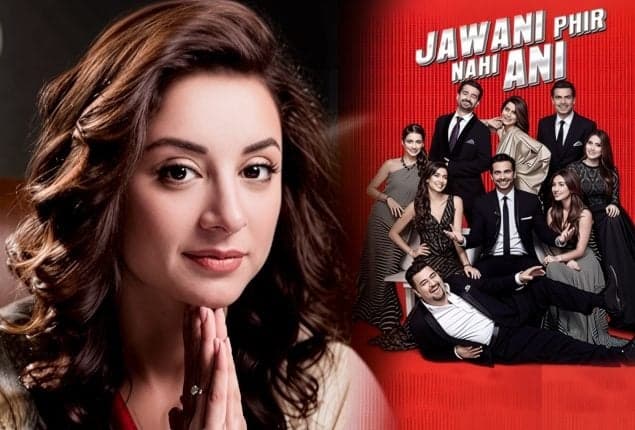
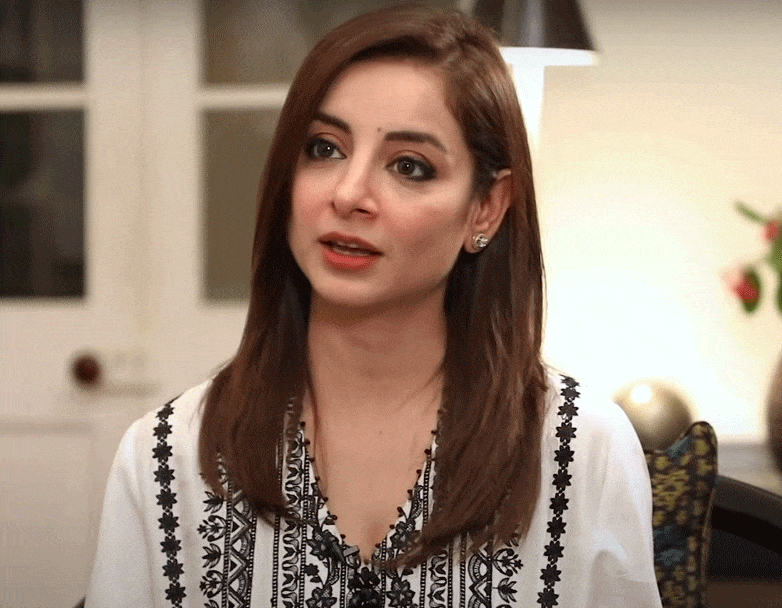
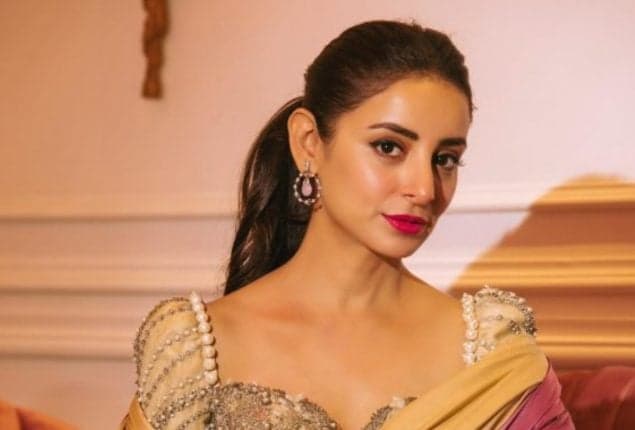
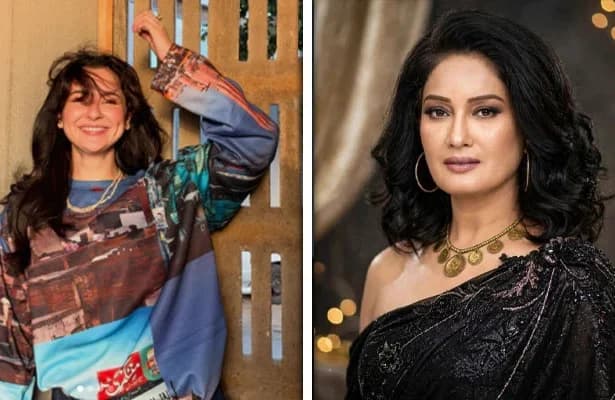
Sarwat Gilani once thought she might be getting a Bollywood opportunity when Aamir Khan’s team reached out to her. What happened next, however, had nothing to do with a film role.
The Pakistani actor recently opened up about her unexpected connection with the Bollywood superstar and revealed that Khan contacted her after her web series Churails began receiving attention in India.
Speaking in a recent interview, Gilani explained that the show’s international success helped her connect with several people from the Indian entertainment industry. Among those connections was someone associated with Aamir Khan’s production team.
“When our web series Churails went abroad, we connected with a lot of Indian people,” she explained. Gilani said she already knew someone from Khan’s production team, which eventually led to the actor reaching out to her.
Naturally, when she heard that Aamir Khan wanted to get in touch, her imagination immediately went somewhere else.
“I thought, ‘Wow, Aamir Khan! Maybe now I’m going to be in a Hindi movie’,” she recalled.
But the Bollywood superstar had a completely different request.
Rather than discussing a potential acting project, Khan wanted something related to one of Pakistan’s most beloved television shows — Loose Talk.
“He wanted the episodes of Loose Talk,” Gilani revealed.
Khan’s interest was specifically connected to the late Moin Akhtar, whose extraordinary ability to disappear into completely different characters had clearly left an impression on the Indian actor.
According to Gilani, Khan told her that he had never seen an actor capable of portraying so many different looks and characters.
Loose Talk was created by legendary writer Anwar Maqsood and featured Moin Akhtar as its unforgettable performer. Maqsood wrote the show and appeared as its host, while Akhtar transformed himself into a different character for almost every episode.
The series first aired on ARY Digital in 2002 and eventually ran for more than 400 episodes over two seasons. Its simple interview format became a showcase for Akhtar’s remarkable range.
One week he could appear as a politician, another time as a sports personality, and then completely transform into an ordinary person from everyday Pakistani life. The characters were fictional, but Akhtar’s performances were so convincing that each one felt like an entirely different individual.
His comic timing, body language, accents and ability to switch personalities made Loose Talk a landmark in Pakistani television comedy.
For Gilani, the story also provided an amusing twist to what initially seemed like a potentially career-changing phone call. She had imagined herself being invited to act in a Hindi film, only to discover that the superstar was interested in getting his hands on episodes of a classic Pakistani comedy show.
The connection itself came through Churails, the 2020 web series that gave Gilani and her co-stars a wider international audience. The show was released on Indian platforms ZEE5 and Zindagi and quickly became a talking point for its bold subject matter and female-led storyline.
Gilani starred in the series alongside Mehar Bano, Nimra Bucha and Yasra Rizvi. The story revolved around four women in Karachi who secretly established a detective agency, taking on cases involving women facing difficult and often hidden realities.
The success of Churails opened doors to conversations across the border, but Gilani’s Aamir Khan story ultimately became less about Bollywood and more about the enduring legacy of Moin Akhtar.
Entertainment
Diljit Dosanjh Sings Nusrat Fateh Ali Khan’s ‘Sanson Ki Mala’ at Wembley
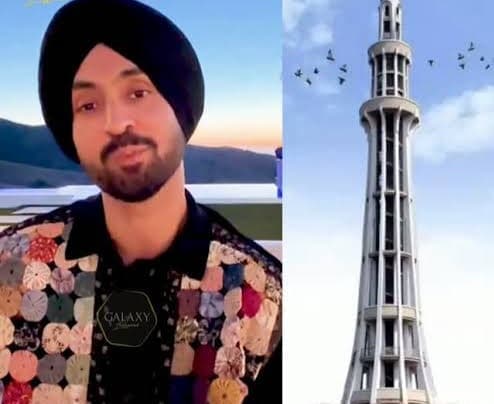
Diljit Dosanjh turned his Wembley Stadium show into a memorable musical moment when he performed Ustad Nusrat Fateh Ali Khan’s timeless classic “Sanson Ki Mala” in front of a packed London crowd.
The Punjabi superstar took the stage at Wembley on September 12 as part of his Aura World Tour 2026, and the atmosphere quickly became something special. Thousands of fans raised the flashlights on their phones, filling the stadium with a sea of lights as Diljit delivered his rendition of the beloved qawwali.
The performance quickly found its way onto social media, with clips of the emotional moment spreading among fans. Many viewers described the rendition as goosebumps-inducing, particularly because of the song’s connection to the legendary Pakistani qawwali singer.
“Sanson Ki Mala” has a long history with Nusrat Fateh Ali Khan. The classic was first performed live by the late maestro in 1979 during his debut visit to India. He had reportedly been invited by legendary Indian actor and filmmaker Raj Kapoor to perform at the wedding of his son, actor Rishi Kapoor.
More than four decades later, Diljit brought the composition to one of London’s most iconic stages, introducing the classic to another generation of music lovers. His decision to include Nusrat’s work in such a major international concert also gave the Wembley performance an added cultural significance.
Read more: Diljit Dosanjh Slams India’s Hypocrisy
Entertainment
Samar Jafri, Fajr Raza talk on the making of ‘Raja London Ka’
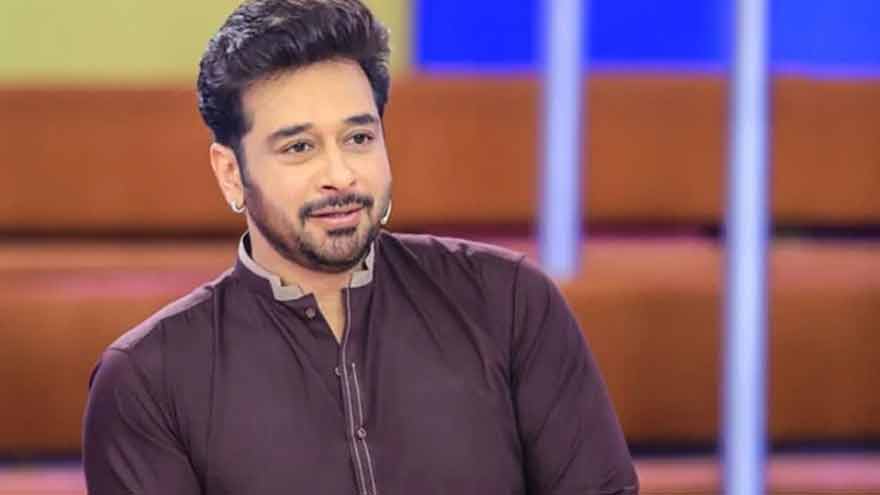
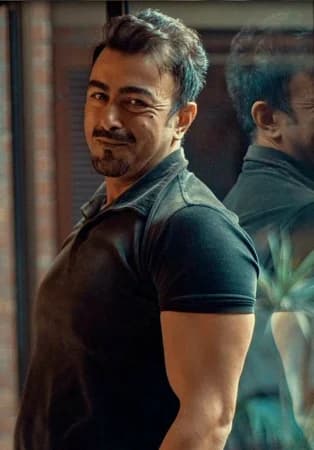
Actor Samar Jafri and Director Fajr Raza reflected on the transformation behind Raja London Ka, from bulking up and tanning for the camera to building a deliberately gritty world that they knew would invite criticism.
Jafri, who had spent years playing gentle, family-oriented characters, said Raja was designed to be the opposite. “The character I played previously was a family boy, a very gentle person,” describing Raja as carrying “anger and a roughness that is very different from my past roles.”
For Raza, making that transformation believable meant ensuring Jafri did not fall back into familiar territory. “I told Samar that I didn’t want a typical chocolate boy here,” he said, explaining that since Raja was written as someone from Landa Bazaar, the actor needed to “beef up a bit and get tanned so it looks like he works out in the sun day in and day out.”
The physical transformation, however, was only part of what Jafri had to change. “I had to completely switch off from the real-life Samar,” he said, adding that performing the show’s action sequences meant first convincing himself that “this violence is justified.”
Raza was equally particular about the world around his lead actor. “If we had shot on polished sets, the show would have lost its soul,” adding that the set needed to look “crusty and grungy so the character actually felt part of that environment.”
That visual approach extended to the way the cast was placed within the setting. Raza said that if the lead actors looked too clean, they would appear out of place, so he made sure they blended into “the brown tones and gritty textures of the background.”
He also used blocking as a storytelling tool, positioning Raja physically lower than his love interest, Rani, “whether on stairs or relative to a car,” so audiences would register the power dynamic between them without it being spelt out.
“Raja has to become worthy of Rani,” Raza said. “The story isn’t just about a hero showing up and winning the heroine; he has to build himself up mentally and socially.”
The visual choices were part of a wider gamble with the serial. Express Entertainment had billed Raja London Ka as a departure from its usual slate, blending romance with action and thriller elements rather than relying on the family-drama template that commonly dominates Pakistani television.
Raza acknowledged the risk of that approach, particularly in choosing an aesthetic that was intentionally rough around the edges. “People might say it should have looked cleaner or more typical, but real life isn’t always polished,” he said. “We intentionally chose a grungy tone because that’s what the show demanded.”
That instinct also shaped the way Raza approached scripts. “I don’t select a script based on a risk assessment,” Raza said. “I look at whether the story excites me. If I am genuinely excited by it, the audience will feel that excitement too.”
For Jafri, meanwhile, stepping into Raja meant confronting a side of performance that was unfamiliar to him. Describing himself as non-violent by nature, he said the show’s action sequences tested him in ways his earlier roles had not.
“In real life, I am a very non-violent person,” he said, recalling that he felt guilty every time he had to kick or punch a co-star during a fight scene.
Making those sequences convincing mattered to him as much as performing them. “If action looks fake, it ruins the whole scene,” adding that every hit needed to carry weight to look “earned and believable on screen.”
With little time for rehearsal, much of the choreography came together on set. “We didn’t have weeks for extensive rehearsals,” Jafri said, crediting action director Azam and DOP Imad for designing camera angles on the spot each morning.
Beyond the physical demands of the role, Jafri also reflected on how his relationship with the industry had changed over the years. Early in his career, he said, there had been constant pressure to prove himself and carve out space. “But now it feels like a family,” he said. “There is a comfort zone on set where you can express yourself freely.”
He credited a sense of gratitude with helping him keep that pressure in perspective. “I rely heavily on Tawakkul,” Jafri said, referring to trust in God, adding that focusing on gratitude and the process rather than external validation stopped industry pressure from becoming overwhelming.
His approach to working with Raza was similarly rooted in trust. Jafri said he deferred to the director’s judgement even when their interpretations differed, since a director was working with “the entire map” rather than a single character’s arc. Disagreements, he added, were simply part of reaching a version of the project that worked for everyone.
Raja London Ka cast Jafri in a role far removed from the soft-spoken leads he had built his career on. The serial brought together romance, action and thriller elements in a departure from the family-drama template, with its deliberately unpolished visual world forming a central part of that experiment.
Read more: Samar Jafri & Aashir Wajahat Tease New Track With Childhood Throwback
Entertainment
Hania Aamir Makes Her Music Debut With ‘Pablo’ Featuring Rakhi Sawant
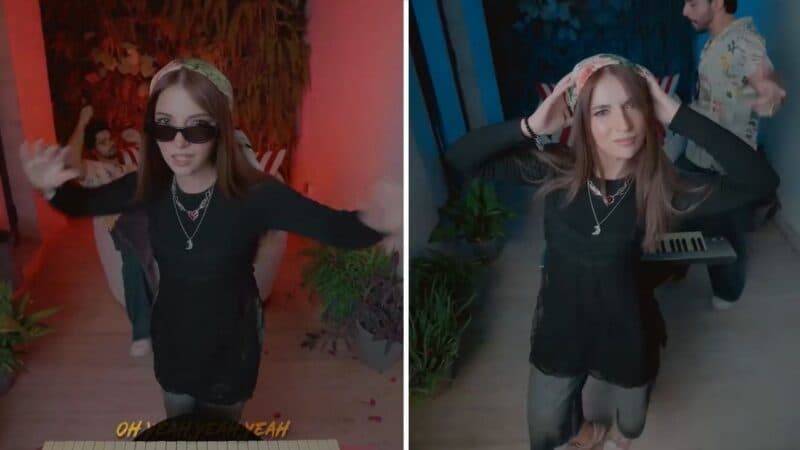
Hania Aamir has officially added another title to her already impressive résumé: singer. The Pakistani actor surprised fans on Wednesday by stepping into the music world with her debut track, “Pablo,” and judging by its lyrics, she had a very specific audience in mind – her critics.
View this post on Instagram
Written and composed by Hania herself, the track begins with a soft piano melody that initially feels very much in line with the actor’s familiar, playful personality. That mood, however, quickly changes when she clears her throat and launches into a Punjabi hip-hop-inspired sound.
Rather than playing it safe with her first song, Aamir uses “Pablo” to address the attention, criticism and assumptions that have followed her throughout her career. She takes aim at people who consider her “fake” because of her appearance or believe she keeps too much of herself guarded from the public.
Her response is essentially that she is far too busy enjoying her own life to worry about what her critics think. In one of the track’s lines, she sings, “Assi hassde te tussi pichhe sarhde-sarhde. Assi chill ay te roz panga lai re ne,” which translates roughly to, “We’re laughing while you’re sitting back burning with jealousy. We’re chilling while you keep trying to pick a fight.”
She also plays with her celebrity status in the song, referring to the fans who follow her wherever she goes and suggesting that even her signature “Pindi attitude” has caught attention across the border in India.
The lyrics then lean into the larger-than-life swagger commonly associated with hip-hop. Aamir jokes about having mansions that sit empty while her friends and her own antics give her plenty to do. It is another playful nod to the very things that seem to keep her critics talking.
One of the song’s central ideas is that Aamir is not sitting around plotting her next move while others speculate about her. Instead, she says she is simply enjoying the music, “vibing to the beat” and doing her own thing.
She even takes a swipe at the constant media attention surrounding her, pointing out that she does not necessarily need to give interviews to remain in the news. Her celebrity presence, it seems, does enough of the talking for her.
Aamir’s message becomes even more direct when she tells her detractors to calm down and remember that everyone ultimately has to answer for their own actions. Her advice is simple: live within your means instead of spending your energy worrying about someone else’s life.
But “Pablo” saves its biggest surprise for the outro!
Indian reality television personality Rakhi Sawant appears at the end of the track with a spoken message specifically for Aamir. Addressing her affectionately as “Hania, my jaan,” Sawant tells the actor not to stress or take tension over the criticism coming her way.
Sawant goes on to praise Aamir’s beauty, calling her a hoor and saying that there is a divine glow on her face. According to Sawant, the negativity surrounding Aamir is simply rooted in jealousy.
The reality star then gives Aamir an extra dose of encouragement, calling her a lioness and urging her to confront her opponents fearlessly. She closes her message with the familiar phrase, “Jo darr gaya, samjho marr gaya,” essentially reminding Aamir that fear should never dictate how she faces her critics.
Read more: Hania Aamir Extends a Warm Welcome to Rakhi Sawant
-
Entertainment3 weeks agoHania Aamir Allegedly Under Drug Influence? Viral Video Leaves Fans Stunned
-
Dramas2 months agoWho Is Naaz From Aap Ki Izzat
-
Entertainment4 weeks agoAdnan Siddiqui Breaks Down in Tears After Seeing His Ancestral Home in India
-
Entertainment2 months agoAnniqa Meraj Becomes Pakistan’s First-Ever Representative at the Miss World Pageant
-
Entertainment2 months agoAtif Aslam’s Alleged Cheating Rumors Go Viral: Here’s What We Know So Far