Entertainment
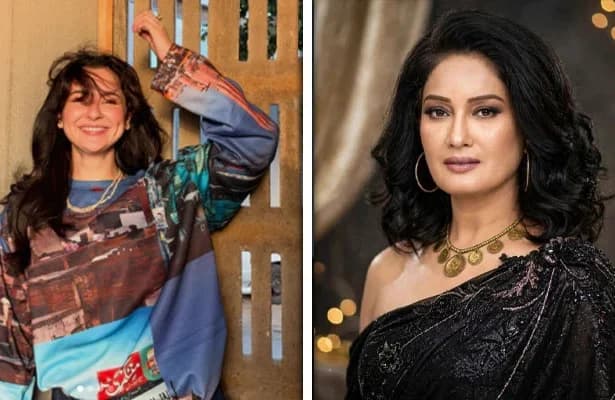
Bizarre Calls on Javeria Saud’s Ramadan Transmission Continues to Go Viral
Ramadan transmissions have always been a major part of Pakistani television during the holy month. Every year, viewers tune in to watch spiritual discussions, charity segments, and live interactions. This year, however, one particular show has been making waves on social media and not always for the reasons the creators might have hoped.
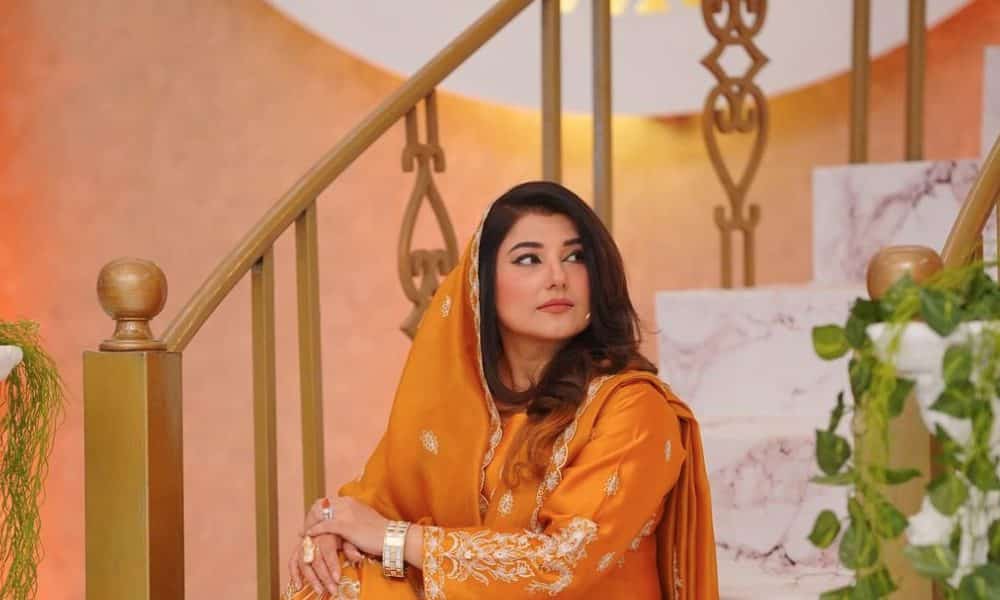
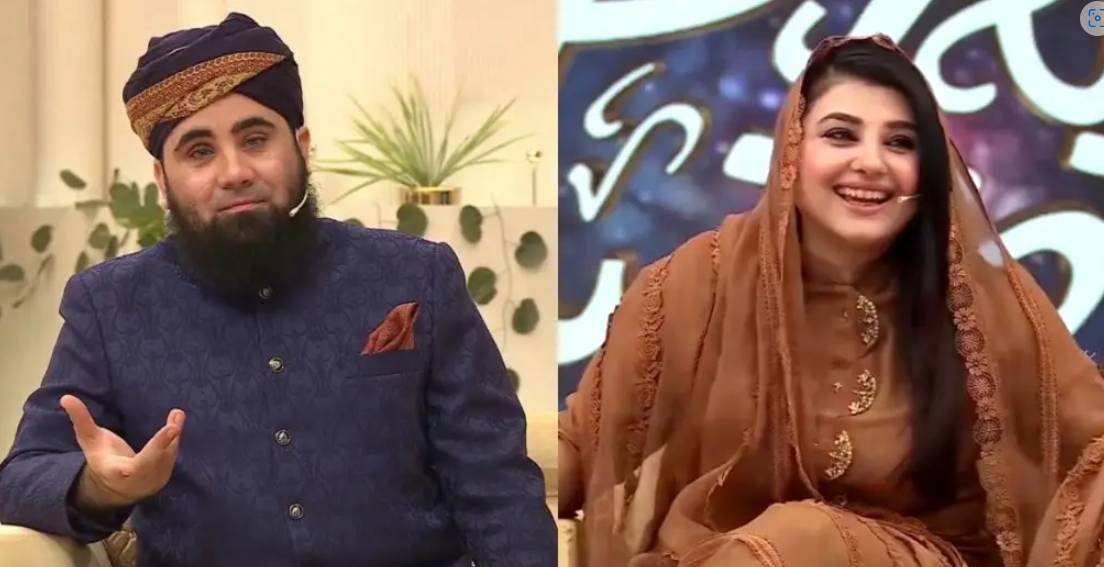
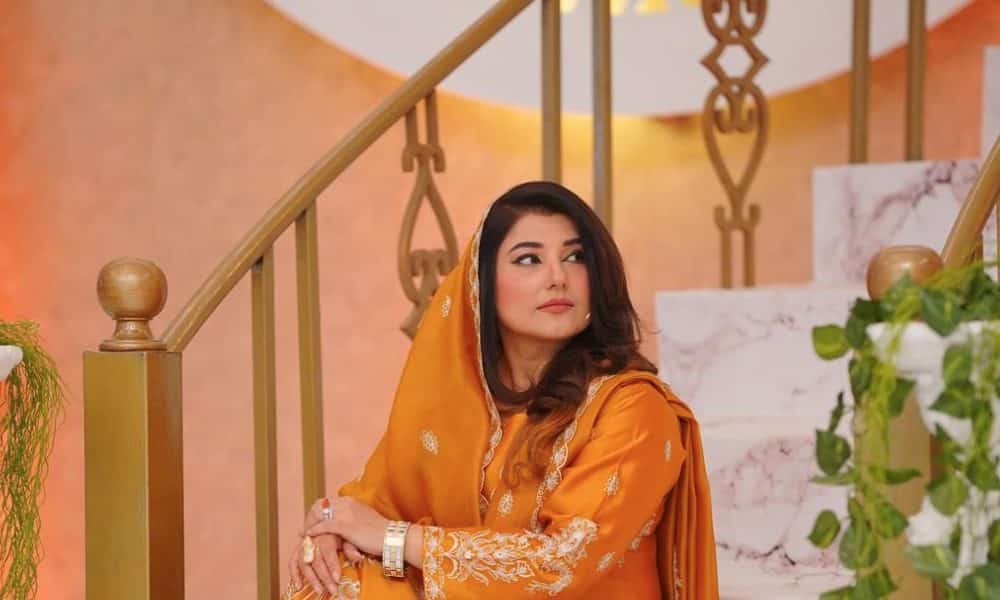
Actress, writer, and television host Javeria Saud has once again returned to host a Ramadan transmission on Express TV. Known for her lively hosting style and dramatic on-air moments, Javeria’s program has quickly become one of the most talked-about Ramadan shows of the season.
A major highlight of the transmission is her on-screen partnership with religious scholar Maulana Azad Jamil. The duo interacts with callers live on air, offering advice and guidance on different issues. While the format aims to help viewers seek solutions to their problems, the nature of some calls has left many viewers surprised and sometimes amused.
Over the past few weeks, clips from the show have been circulating widely on social media platforms. In these viral moments, callers present unusual or seemingly trivial questions to the hosts. One caller reportedly asked the Maulana for advice on choosing a gift for his girlfriend, while another described a relative in an odd manner that sparked confusion and laughter online.
These unexpected conversations have turned the show into a trending topic across the internet. However, the viral attention has also brought criticism. Many social media users believe the calls appear staged or exaggerated for entertainment value rather than being genuine concerns.
Despite the criticism, Javeria Saud has made it clear that she is not bothered by the backlash. Speaking about the reaction online, the host said she is more focused on the positive impact of the show rather than the negativity surrounding it. According to her, the team behind the transmission has managed to help numerous people during Ramadan, and that remains their primary goal.
She emphasized that the program has been actively involved in charity work and assistance efforts for people in need. For Javeria, these initiatives outweigh any criticism circulating online.
Still, the debate continues on social media. Some viewers insist the bizarre calls are carefully scripted to increase viewership and ratings. Others feel the unusual questions simply reflect the diverse concerns people bring to live television.
Critics have also questioned whether regulatory bodies should take notice of such programming. A few social media users argued that television content during Ramadan should maintain a more serious tone. Meanwhile, supporters of the show believe the lighthearted interactions make the program more engaging for audiences.
Read more: Javeria Saud answers outfit critics: I answer to Allah
Entertainment
Urwa Hocane Leaves Fellow Stars in Awe With Powerful Aap Ki Izzat Performance
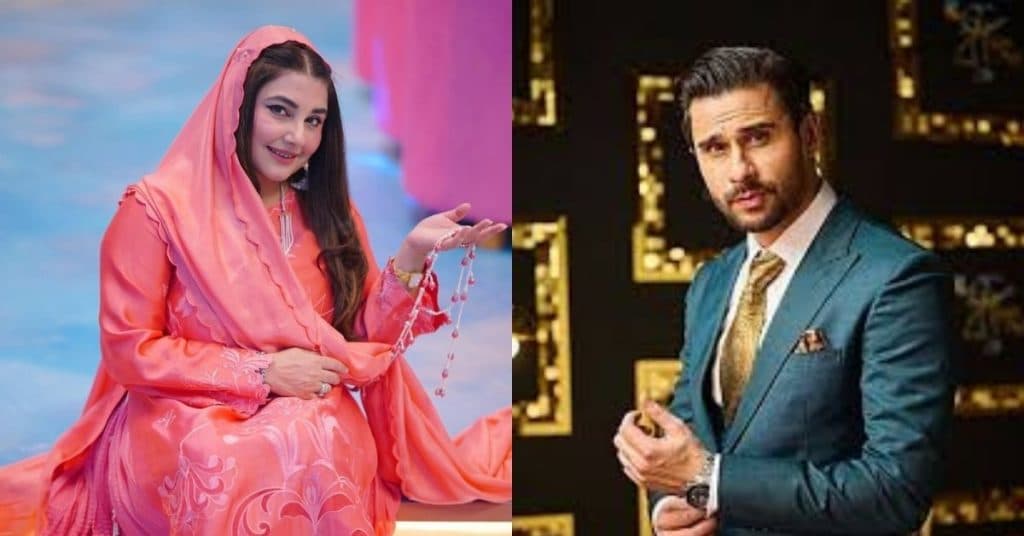
Urwa Hocane has found herself at the centre of a wave of praise after delivering one of the most talked-about performances on Pakistani television in recent episodes of Aap Ki Izzat.
The Hum TV drama, starring Hocane alongside Ahsan Khan, has already been winning attention for its emotionally charged storyline. But episodes 15 and 16 took things to another level, leaving viewers and fellow celebrities talking about one scene in particular.
At the heart of the drama is Beena, played by Hocane, and her 14-year marriage to Tabish, portrayed by Khan. Their relationship has gradually deteriorated under the weight of emotional neglect, diminishing respect and wounds that have remained unspoken for years.
That silence finally broke in the latest episodes.
Beena confronts Tabish and pours out the pain she has carried throughout their marriage. What begins as a confrontation turns into an intensely emotional monologue, as she challenges her husband’s behaviour and refuses to keep swallowing her feelings.
She calls out what she sees as his religious hypocrisy while also confronting him over years of emotional neglect and abuse. Rather than portraying Beena as simply angry, Hocane brings out the vulnerability beneath her words, making the scene feel deeply personal and painfully restrained.
That balance appears to be what struck a chord with audiences and industry colleagues alike.
Soon after the episodes aired on Friday and Saturday, several Pakistani celebrities took to social media to applaud the performances, with much of the attention directed toward Hocane’s portrayal of Beena.
Her husband, actor and singer Farhan Saeed, was among the first to publicly appreciate the performance, praising his wife’s powerful monologue. His reaction was soon followed by her sister, Mawra Hocane, who also shared her admiration for the emotionally demanding scene.
Sonya Hussyn was equally impressed, highlighting Hocane’s dialogue delivery and the subtlety with which she handled the moment. She praised the performance for being powerful without becoming excessive, pointing to the precision behind Hocane’s portrayal.
Zhalay Sarhadi, Yumna Zaidi, Zara Noor Abbas and Ayesha Omar were also among the stars who shared their appreciation for the performances through their Instagram Stories.
While the celebrity reactions have certainly added to the buzz, Aap Ki Izzat appears to be striking a deeper chord with viewers because of the conversation surrounding its central relationship.
Directed by Saife Hasan and written by Umera Ahmed, the drama explores the less visible problems that can exist inside a marriage. Rather than focusing only on dramatic confrontations, the story has drawn attention to emotional neglect, respect, dignity and the difficult process of finally speaking about pain that has been ignored for years.
Read more: Faisal Qureshi: Pakistani dramas match Netflix in global popularity
Entertainment
Pasoori Makes History as First Pakistan-Made Music Video to Cross 1 Billion YouTube Views
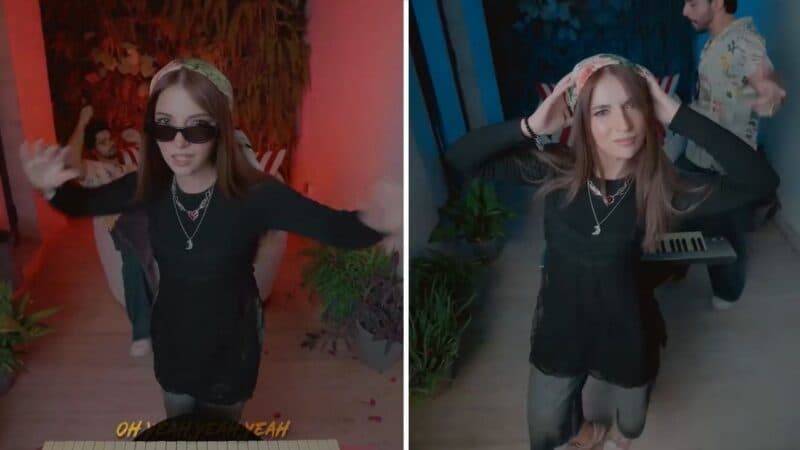
Four years after taking the world by storm, Pasoori has reached another remarkable milestone. The Coke Studio hit has officially crossed one billion views on YouTube, becoming the first music video made in Pakistan to achieve the feat.
Released in February 2022, the Ali Sethi and Shae Gill collaboration quickly grew from a popular Coke Studio track into an international phenomenon. Now, more than four years after its release, Pasoori has cemented its place in Pakistani music history.
Coke Studio announced the achievement on Instagram on Sunday, celebrating the listeners who helped carry the song far beyond its original audience. The platform thanked everyone who had pressed play, sung along and made the song their own.
The celebration also brought the song’s creative team back into the spotlight. Coke Studio shared a reel featuring Sethi and Gill alongside producers Zulfiqar Khan, better known as Xulfi, and Abdullah Siddiqui, as they marked the extraordinary achievement with fans.
There was little doubt that Pasoori was heading toward a milestone of this scale. From the moment it arrived, the Punjabi-language song struck a chord with listeners, combining folk influences with a modern pop sound and the unmistakable vocal chemistry between Sethi and Gill.
Its success was not limited to YouTube. Pasoori became Spotify’s most-streamed Pakistani song in 2022 and continues to be the most-streamed track on the platform for both Sethi and Gill. The song has accumulated close to 405 million Spotify streams, showing just how long its popularity has lasted.
Fans across Pakistan, India and other parts of the world created their own covers, performances and interpretations, turning Pasoori into something much bigger than a conventional Coke Studio release.
The song even found its way into the Marvel universe. It appeared on the soundtrack of Disney’s Ms. Marvel, a series deeply connected to Pakistani culture through its Pakistani-American protagonist. That exposure introduced the track to an even wider international audience.
Coke Studio Africa later gave Pasoori a fresh identity through a remix featuring Ali Sethi alongside Egyptian rapper Marwan Moussa and Nigerian singer Reekado Banks. The version blended the original song with Nigerian Afrobeats influences, giving the Pakistani hit another life on the African music scene.
Bollywood, too, eventually put its own spin on the phenomenon. Arijit Singh lent his vocals to a rendition of Pasoori, further underlining how deeply the song had travelled across the region and how recognizable its melody had become.
Read more: Ali Sethi Announces New Fusion Album ‘Room Jhoom’
Entertainment
Atif Aslam Reveals the Bollywood Song He Regrets Singing
Pakistani singer Atif Aslam diwcussed India-Pakistan music conversation after sharing his thoughts on Coke Studio Pakistan and its Indian counterpart, Coke Studio Bharat.
In a recent interview, Atif was asked what he believes makes the Pakistani version of the popular music franchise different from the Indian edition. His answer was “Jaadu” — magic.
The singer explained that he does not believe the difference is necessarily about the quality of the compositions. In his view, both platforms have produced strong music. What sets Coke Studio Pakistan apart, he suggested, is the connection to the roots and rawness of the region’s musical traditions.
Atif said he feels those deeper musical roots are not as noticeable in the Indian version. He also drew a distinction between the creative approaches of the two platforms, arguing that Coke Studio Bharat appears to place more emphasis on commercial appeal.
According to the singer, Coke Studio Pakistan gives greater importance to original compositions and allows musicians to add their own identity to a song. He described the process as a collaborative one, where multiple people can work on a composition before the singer is encouraged to perform it in their own style.
For Atif, that combination of collaboration, originality and individual expression is what creates the special quality he associates with Coke Studio Pakistan.
But his comments about Coke Studio were not the only part of the interview to attract attention. Atif was also asked about a song from his career that he wished had been recorded by another singer.
His answer came without much hesitation – “Tere Liye.”
The song is from the 2007 Bollywood film Prince, starring Vivek Oberoi, and featured Atif singing alongside Shreya Ghoshal. It became one of the songs associated with Atif’s Bollywood career and remains available on major music platforms. (Apple Music – Web Player)
However, Atif now says he wishes someone else did the song instead of him. “Tere Liye” was part of the period when Atif had a particularly strong presence in the Indian music industry. He is a familiar voice for Indian listeners, with songs such as “Woh Lamhe,” “Pehli Nazar Mein,” “Tu Jaane Na” and “Dil Diyan Gallan” becoming widely recognised.
The “Tere Liye” remark has already drawn a response from composer Sachin Gupta, who worked on the song. Gupta questioned Atif’s regret and pointed out that the singer had previously appeared enthusiastic about the track. He also reminded him of the song’s role in his popularity among Indian audiences.
Read more: Atif Aslam’s Prince
-
Entertainment2 weeks agoHania Aamir Allegedly Under Drug Influence? Viral Video Leaves Fans Stunned
-
Dramas2 months agoWho Is Naaz From Aap Ki Izzat
-
Entertainment2 months agoNadia Khan Faces Industry-wide Backlash After Mocking Sajal Aly’s ‘Zanjeerain’ Performance
-
Entertainment3 weeks agoAdnan Siddiqui Breaks Down in Tears After Seeing His Ancestral Home in India
-
Entertainment2 months agoAnniqa Meraj Becomes Pakistan’s First-Ever Representative at the Miss World Pageant