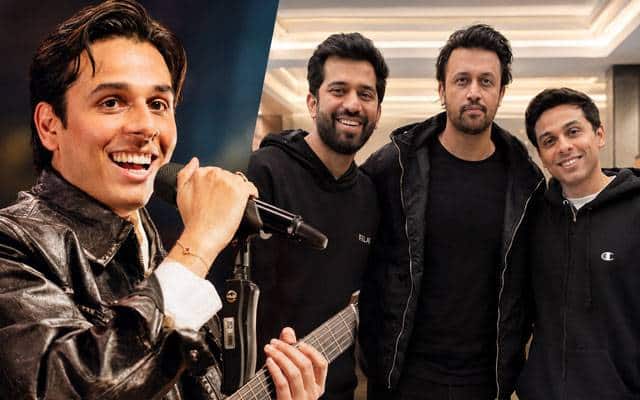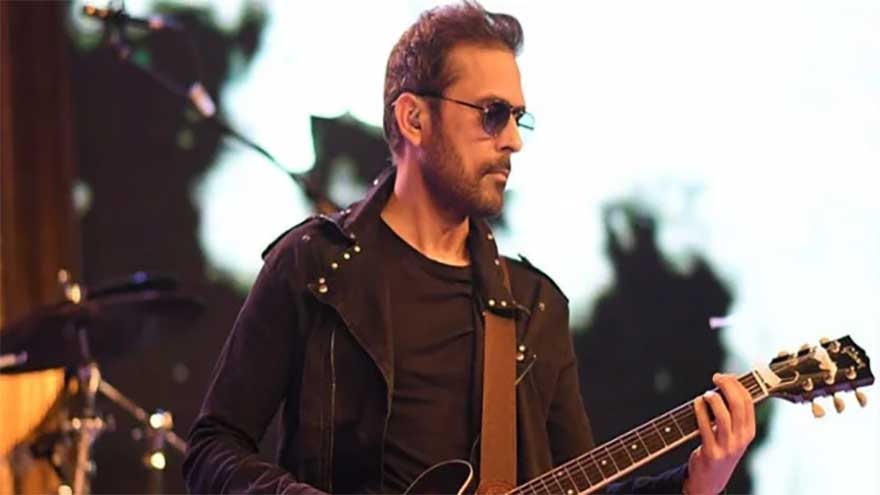



Subah Aye Na is bold, Punjabi-heavy and clearly experimental—but in trying to reach every kind of listener, Atif Aslam sometimes forgets what makes him unique.
After an 18-year break from the traditional album format, Atif Aslam’s return should have been one of the biggest moments in South Asian music.
Released on July 31, 2026, Subah Aye Na is Atif’s fourth studio album and his first full-length record since Meri Kahani in 2008. The project contains eight tracks and runs for just over 32 minutes.
Naturally, expectations were enormous.
This was not supposed to feel like another collection of film songs or commercially calculated singles. After nearly two decades, listeners expected a clear statement from Atif—an album that would show us who he is as an artist today.
Instead, Subah Aye Na often sounds like Atif is still trying to figure that out.
The album is ambitious, unpredictable and clearly designed as an experiment. It moves between slow romantic songs, faster commercial tracks, modern Punjabi pop, hip-hop influences and dramatic ballads. Atif deserves credit for taking risks rather than simply recreating the sound of Aadat, Doorie or his familiar Bollywood hits.
But the experiments do not come together as one complete musical journey.
Rather than sounding like a carefully constructed album, Subah Aye Na often feels like several different versions of Atif Aslam competing for space on the same project.
Punjabi Is the Foundation, but the Album Keeps Changing Direction
The album is predominantly Punjabi, although Atif occasionally switches into Urdu. The change in language is not the real problem. Punjabi and Urdu can easily coexist within the same album without making it feel disconnected.
The bigger issue is the constant change in musical identity.
One moment, Atif is delivering contemporary Punjabi pop. The next, he is leaning into hip-hop or a faster, more energetic sound. Then the album suddenly shifts into a dramatic romantic ballad that sounds as though it was created for a Bollywood film.
Some songs feel designed for Punjabi streaming playlists. Others sound intended for younger listeners. A few appear built for live concerts, while the slower ballads feel like they are waiting for a film director to place them over an emotional scene between two actors.
Those ballads are not necessarily bad songs. Atif has built a major part of his career singing emotionally charged film music, and his voice remains perfectly suited to it. He has delivered some of the most memorable romantic songs in modern Bollywood.
But on a personal studio album, those tracks should reveal something deeper about him as an artist. Instead, some of them feel like polished soundtrack songs that belong in a film rather than essential pieces of Subah Aye Na.
The result is musical whiplash.
The album moves from modern Punjabi coolness to Bollywood-style emotion and then changes direction again before either identity has time to develop. The songs may work individually, but they do not always feel as though they belong on the same record.
“Char Yaar” Steps Into AP Dhillon and Sidhu Moose Wala Territory
“Char Yaar” is one of the clearest examples of Atif attempting to enter the world of contemporary Punjabi pop and hip-hop.
To my ears, the track carries the atmospheric modern-Punjabi feel associated with AP Dhillon, mixed with some of the confidence and swagger listeners associate with Sidhu Moose Wala.
That does not mean Atif is directly copying either artist. Musical influences are natural, especially when an established singer returns to the album format after 18 years and finds that the Punjabi music industry has completely transformed.
The issue is not the influence itself. The question is whether that influence feels natural.
AP Dhillon’s appeal comes partly from his restrained, laid-back delivery. Sidhu Moose Wala brought a different kind of authority, attitude and cultural confidence. Their music works because their personalities feel inseparable from the sounds they perform.
Atif’s greatest strengths have always been different.
His voice carries vulnerability, urgency, desperation and emotional unpredictability. He can make a simple romantic line feel wounded, spiritual or deeply personal. That emotional intensity is what made Atif sound different from almost everyone else.
On “Char Yaar,” however, he seems to be adopting the posture of the current Punjabi scene rather than reshaping that scene around his own strengths.
Atif is talented enough to perform almost any style. But being capable of singing over a certain kind of production is not the same as completely owning it.
“Char Yaar” feels less like Atif creating a new direction and more like him temporarily stepping into someone else’s lane.
“Sun Sajna” Gives Strong AP Dhillon “With You” Vibes
“Sun Sajna” creates a similar problem, and the AP Dhillon influence feels even more obvious.
The track carries the smooth, polished and romantic Punjabi-pop atmosphere heard in AP Dhillon’s “With You.” Dhillon released “With You” in 2023, and the song became closely associated with his softer, effortless approach to modern Punjabi romance.
“Sun Sajna” gives off that same late-night romantic vibe.
The resemblance is not necessarily about an identical melody or copied composition. It is more about the overall mood, restrained delivery and musical space the song appears designed to occupy.
It sounds like a track made to sit comfortably next to “With You” on a Punjabi-pop playlist.
From a commercial perspective, that approach makes sense. AP Dhillon’s sound has had a major influence on modern Punjabi music, particularly among younger listeners and the South Asian diaspora.
Artistically, however, it raises a fair question: Why do we need Atif Aslam to recreate an AP Dhillon mood when AP Dhillon already does it naturally?
Atif should not need to follow the direction established by younger Punjabi artists. He has enough vocal personality, history and musical influence to establish a direction that other artists might follow.
“Sun Sajna” is pleasant and listenable, but it does not feel especially fresh. Instead of hearing Atif transform contemporary Punjabi pop through his unmistakable emotional style, we hear him restraining himself to fit inside an already successful formula.
Taken together, “Char Yaar” and “Sun Sajna” strengthen the impression that Atif has been studying the current Punjabi market and asking how he can appeal to listeners raised on AP Dhillon, Sidhu Moose Wala and the streaming era.
There is nothing wrong with wanting to attract a younger audience. The mistake is believing Atif needs to sound like younger artists to accomplish it.
The Bollywood Ballads Feel Like They Belong in a Film
Elsewhere, Subah Aye Na moves in the opposite direction.
After experimenting with contemporary Punjabi production, Atif suddenly returns to the type of dramatic romantic ballad that has defined much of his playback-singing career.
These songs allow him to use the emotional power of his voice, but they also feel overly familiar. Some sound less like personal album tracks and more like songs created for a Bollywood soundtrack—complete with polished arrangements, cinematic emotion and lyrics seemingly waiting for a dramatic breakup or reunion scene.
Again, Atif performs this style extremely well. The problem is not his ability.
The problem is placement.