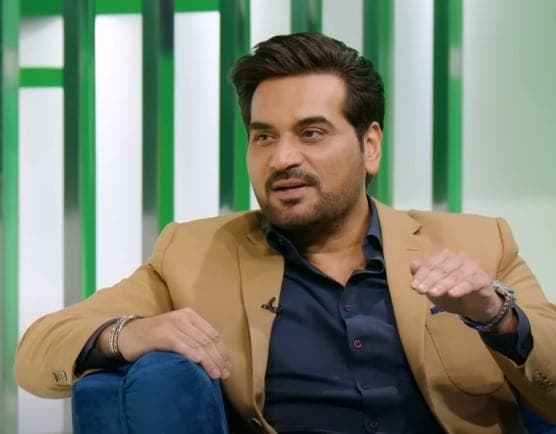
Humayun Saeed believes Pakistani dramas deserve greater international visibility, including on streaming platforms such as Netflix, but says the country needs to develop its own over-the-top (OTT) platform to help local productions reach wider audiences.
In an interview with Ali Salman, the actor and producer discussed the distinctive style of Pakistani television, the challenges facing the local streaming industry, the role of social media in discovering new talent and the lessons he learnt while working on the international series The Crown.
Speaking about the possibility of Pakistani dramas reaching Netflix, Saeed said local productions had a distinct identity, particularly in their writing, dialogue delivery and use of Urdu. “Our dramas have a specific style. The writing also has its own style. When we deliver our lines, there is a way of speaking because of the way our Urdu is delivered,” he said.
Acknowledging that OTT productions often adopt a different, edgier approach, Saeed maintained that existing Pakistani dramas could still find an audience on international streaming platforms. “If you are saying the dramas we have already made should go on Netflix, then yes. We do have our own style,” he said.
Saeed suggested that political considerations might influence Netflix’s approach to Pakistan, although he admitted he was unsure when local productions might become available on the platform.
Rather than relying solely on international streaming services, the actor stressed the importance of establishing a local OTT platform where Pakistani filmmakers and actors could showcase their work.
“Where there will be a platform, things will be made. Pakistani OTT will be made and once people show their work, then there will be Netflix,” he said, pointing to India’s experience as an example. “Even in India, these OTT platforms came first,” he added.
Saeed also called on the government to give the entertainment industry greater attention and support. “I think the government should do something about it and give importance to it,” he said.
Social media is opening doors for new talent
Beyond streaming platforms, Saeed discussed how social media had changed the way aspiring actors entered the entertainment industry.
He recalled a time when newcomers had to audition, meet directors, learn from experienced professionals and rehearse before securing roles. Platforms such as TikTok now allow people to showcase their skills directly, creating new opportunities while making it more difficult to distinguish acting ability from online popularity.
Citing Hania Aamir as an example, Saeed recalled discovering the actor through Dubsmash before casting her in a drama. “The thing is that even I saw Hania on Dubsmash and then we took her in a drama so there is potential,” he said.
However, he cautioned that performing well in short social media videos did not necessarily translate into the ability to handle a scripted role. An actor’s skills became clearer when they were given proper dialogue and scenes to perform, he suggested.
Saeed also reflected on his own unconventional entry into showbiz, revealing that he had been working in a factory before an opportunity led him towards acting.