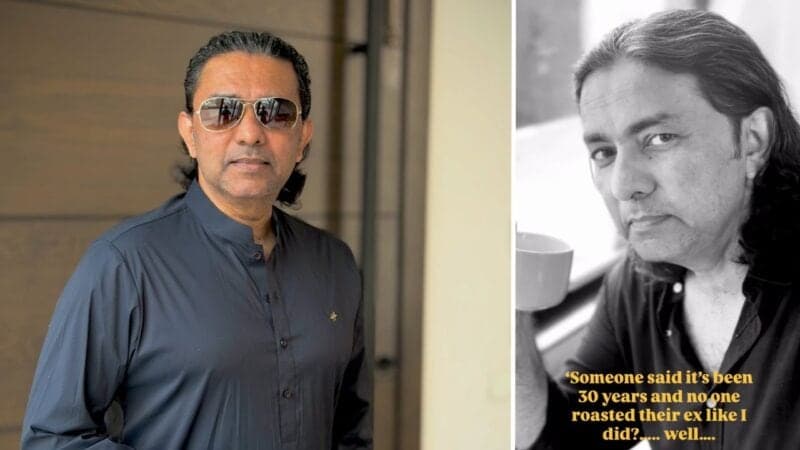


Actor Nabeel Zafar, during a recent interview, addressed one of the entertainment industry's most enduring and deeply felt frustrations: the complete absence of a royalty system for actors, even as their performances continue to be re-aired for years—and in some cases, decades—after their original premiere dates.
Zafar described the lack of royalties as one of the most painful and glaring shortcomings within the industry. He pointed out that shows like his own beloved, long-running sitcom *Bulbulay* are currently being broadcast multiple times a day across a wide range of television channels, yet none of that repeated airtime generates any financial return for the actors, writers, or creators who originally contributed to the show's success.
"If I were receiving royalties for these broadcasts, my children and I would be well provided for," he said candidly. "Think about it—digital has become an entire platform now. But as for the channels we work with, they say, 'Don't even think about it; you should lose your memory regarding this,'" the actor added, highlighting the dismissive and discouraging attitude that performers often encounter when they raise the issue of residual payments.
Zafar also pushed back on the perception of acting as a lucrative career in the country. "Globally, show business is known as the highest-paying profession, but in Pakistan, if your pay cheque is delayed by even two days, you are finished; you have nothing left. Then you are left fighting a battle for survival," he said.
That, he claimed, was also why so few artists spoke up publicly about the industry's problems. "Let me tell you, we are very helpless people," he said. The actor added, "The battle for survival is so extreme that while everyone is aware of the situation and knows the mindset, no one wants to speak out publicly, because the issues that exist in our industry are real."
Zafar also discussed his own career journey, sharing how he went from serious dramas to long-form comedy.
The actor noted that Bulbulay, now past 800 episodes since it first aired, had been running long enough to grow up alongside its viewers. Keeping the sitcom fresh after nearly two decades, however, was the hardest part of the job, he said. "It might look easy that I'm standing at over 800 episodes after 17 years, but behind it lies massive effort, especially regarding content," he stated. "The hardest part is keeping the content engaging with just four or five characters. And you can't repeat yourself," Zafar added.
The actor also discussed how he came to produce his own work, after starting without the funds to hire other actors. "I felt I needed to step into production, so I created my own production company," he said. "I didn't have enough money, so to save costs, I played the character myself," Zafar shared.
He also noted that his move into directing came in 2003, with the serial Waada. "I got bored in between, so in 2003, I directed my first major serial called Waada with a huge ensemble cast," he said. "I didn't act in it; I only directed," the actor added.