Connect with us

Celebrities

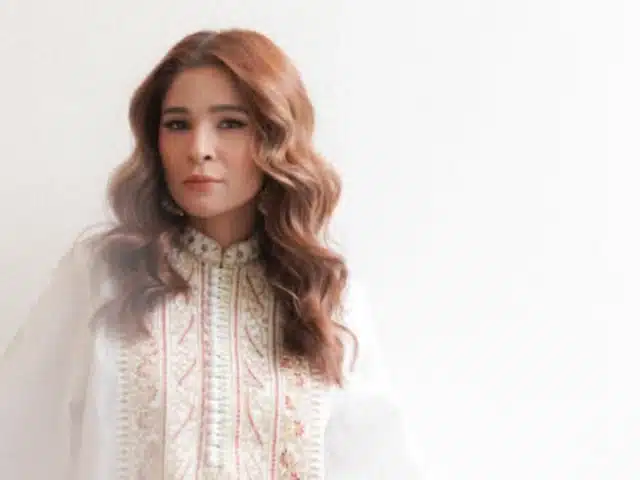
Ghulam Mohiuddin and Ahmed Ali Butt compare Hania Aamir to legendary star Babra Sharif

Ghulam Mohiuddin

Veteran actor Ghulam Mohiuddin and comedian Ahmed Ali Butt have likened Hania Aamir to legendary star Babra Sharif, noting similarities in their body language and sharp features.

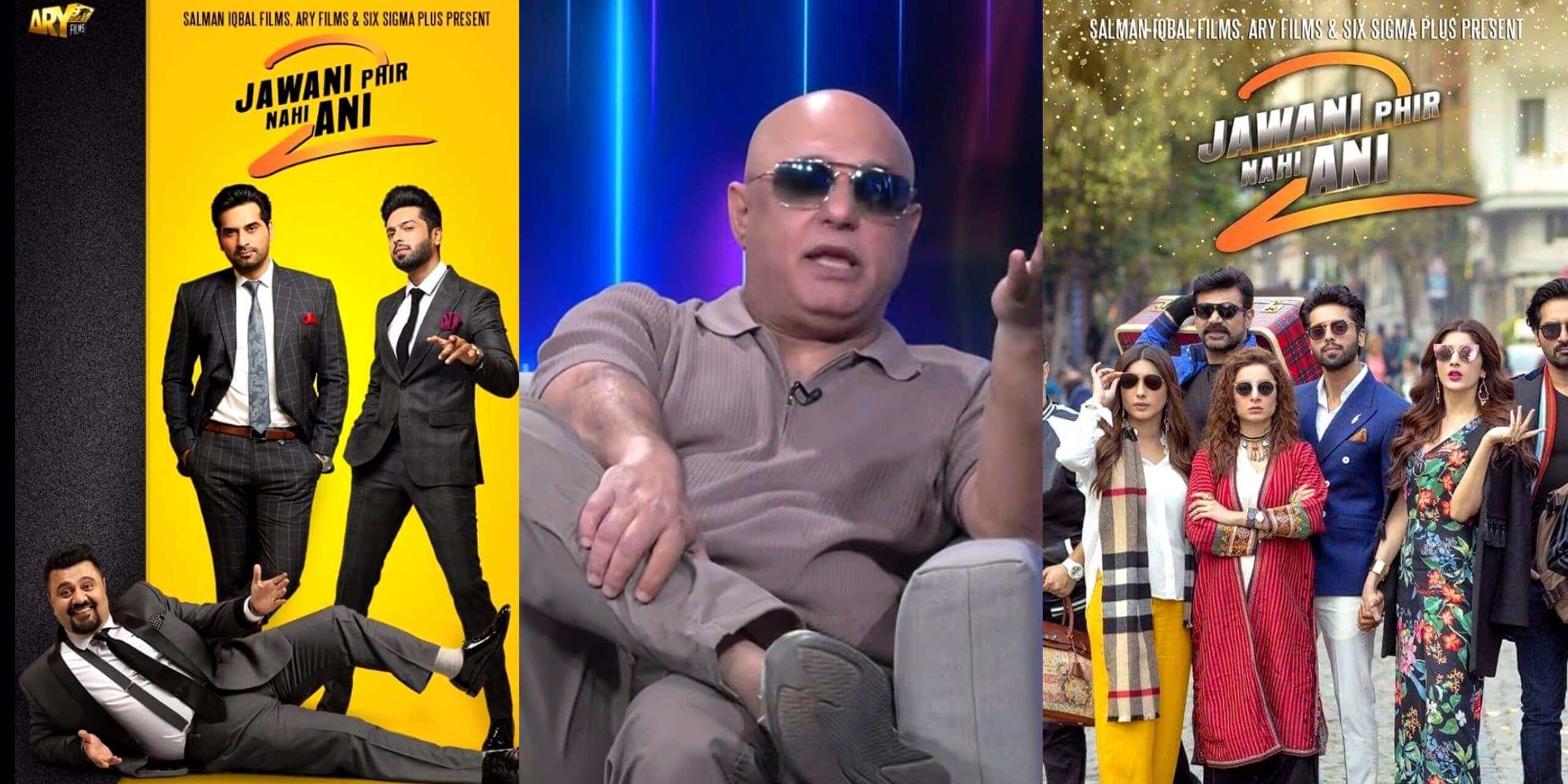
The comparison came during an interview where they also discussed Punjab’s new Film City project, the industry’s decline, and the potential remake of Mohiuddin’s classic film ‘Mera Naam Hai Mohabbat’.

Released in 1975, ‘Mera Naam Hai Mohabbat’ introduced Ghulam Mohiuddin and Babra Sharif to the Pakistani silver screen and propelled both actors to stardom following the film’s commercial success.

Babra Sharif went on to become one of Pakistan’s one of the most celebrated actresses during the 1970s, 1980s and 1990s. She began her career in television commercials in 1973 before making her film debut in ‘Mera Naam Hai Mohabbat’, where she portrayed a terminally ill young woman.

The romantic drama revolved around a young woman concealing her illness from her lover while her family also remained unaware of her condition. The film, remembered for its tragic ending and emotional storyline, won the Nigar Award for Best Film in 1975.

During the interview, Butt asked Mohiuddin whether he would consider remaking ‘Mera Naam Hai Mohabbat’. Mohiuddin replied that he would be willing to revisit the project if he could find someone similar to Babra Sharif. Butt then suggested Hania Aamir, calling her the Gen Z version of Babra Sharif in terms of looks and personality, a comparison Mohiuddin agreed with.

The remarks quickly generated discussion on social media, where Hania Aamir enjoys a strong following. The actor, known for her work in Urdu and Punjabi television and cinema, began her career with the 2016 comedy film ‘Janaan’. She made her television debut a year later with the romantic drama ‘Titli’, earning widespread recognition before starring in projects such as ‘Anaa’, ‘Na Maloom Afraad 2’ and the war film ‘Parwaaz Hai Junoon’.

Speaking further during the interview, Mohiuddin said he had spent years trying to secure funding for the Film City initiative and had finally succeeded. He added that he played a major role in shaping the proposal and bringing together the people involved in the project.

Announced last month, the Film City project is being presented by the Punjab government as a flagship initiative aimed at rebuilding Pakistan’s long-neglected film and media sector and revitalising the entertainment industry.

According to an official statement, the project has been envisioned as Pakistan’s first fully integrated “end-to-end” media production hub, combining film, television, digital media, virtual effects and post-production facilities within a single coordinated framework.

Mohiuddin said investment and development in the entertainment sector could help bring greater international recognition to Pakistan’s film industry. He added that cooperation, planning and institutional structure were essential for the industry’s revival and long-term growth.

Ghulam Mohiuddin remains one of the most recognised figures in Pakistani cinema, with a career spanning more than 400 Urdu and Punjabi films from the 1970s onward. He entered the film industry with ‘Dil Walay’ in 1974 before achieving major success through ‘Mera Naam Hai Mohabbat’ the following year.

Over the decades, he became known for films such as ‘Rangeelay Jasoos’, ‘Lady Commando’ and ‘International Gorillay’, cementing his place as one of the defining stars of Pakistani cinema.

Read more: Hania Aamir Says She Wakes Up Feeling Lost Wondering ‘Who Am I?’

Celebrities

Stories must reflect realities, local culture: Shaan Shahid

Shaan Shahid has urged the Pakistani film industry to move away from repetitive formulas and focus on creating original stories that reflect local culture and realities.

Appearing on Dunya TV programme ‘Mazaq Raat’ along with Meera, Shaan Shahid said the film industry should stop copying foreign trends.

“Invest in talent instead of property or safer businesses,” he said, adding that filmmakers need to take creative risks for the industry to grow.

He added that Pakistani cinema needs to develop its own cultural voice.

The industry needs its own content, its own identity, told in the context of modern Pakistan,” he noted.

Meera echoed the sentiment, pointing to her upcoming work as an example of experimentation within local cinema.

“People ask why we do not make films on topics like Hollywood, why we are not exploring different ideas. To them, the answer is my film Psycho, where Shaan has addressed a subject closer to Hollywood and a genre different from the usual,” she said.

She added that such projects represent an effort to broaden the scope of storytelling in Pakistan and push audiences towards new genres.

Building on this creative direction, Shaan revealed that a new film is currently in development titled English Minglish, with Meera in the lead role. He has written the script, screenplay, and is directing the project himself.

“The pipeline ahead features a comedy film, and its name is English Minglish,” he said. “It stars Meera, and her character’s task in the movie is that she has to learn English in three months.”

Meera said she is excited about collaborating again with Shaan on the project and is also working on Psycho 2.

Reflecting on Meera’s journey, he said her return to films came at a difficult time.

“When Meera decided she wanted to do a film again, I felt here is an actress, a woman, struggling to define herself and find her domain. My effort is to develop an ecosystem of scripts around her,”

Continue Reading

Celebrities

Durefishan Saleem condemns the mindsets that endanger women

Durefishan Saleem

Pakistani actress Durefishan Saleem has initiated a thoughtful dialogue on women’s safety, societal conditioning, and the often-unseen struggles that women endure.

In a heartfelt social media post, she reflected on the everyday realities faced by women and urged society to examine the attitudes and behaviors that subtly perpetuate larger systemic issues.

Sharing glimpses from the Hollywood film Ladies First on Instagram, Durefishan accompanied the images with a deeply personal note that resonated with thousands of her followers. She revealed that the film left a profound impact on her—not for its cinematic excellence, but for the critical questions it posed about gender, freedom, and societal norms.

“Maybe it was the fever and bed rest for days. Maybe it was the exhaustion that comes from watching the news and realizing how little has changed. But something about it lingered,” she wrote.

Reflecting on the film’s central idea, Durefishan spoke about a world where gender roles are reversed and men experience the caution and fears that women often grow up with.

“What if, for just one day, men walked through a world designed by our fears instead of theirs? What if they heard the warnings we inherit before we learn independence? The calculations we make before a walk home. The caution stitched into our freedom,” she noted.

The actress clarified that her message was not rooted in resentment toward men but rather in a desire for self-reflection and accountability.


“I don’t hate men. I never have. But I have learned to be careful with the space I give them in my life,” she wrote, adding that harmful attitudes often begin in seemingly insignificant moments that society chooses to overlook.

Durefishan further emphasized that change begins by challenging the excuses and behaviors that are normalized from childhood.

“The problem isn’t only in the monsters we condemn. It is in the habits we excuse, the lessons we don’t teach, and the standards we quietly lower,” she stated.

Her thoughtful remarks struck a chord with social media users, many of whom praised her for addressing a sensitive issue with honesty and nuance.

The comments section quickly filled with appreciation, with one user writing, “Uff, the caption touched my heart.”

Another follower commented, “Dure’s captions are always on point.”

Read more: Durefishan Saleem Reflects on Emotional Hajj Journey

Continue Reading

Celebrities

Pakistan’s culture and craftsmanship shine at Cannes, says Sanam Saeed

Sanam Saeed

Sanam Saeed recently appeared on PTV, where she discussed representing Pakistan at the Cannes Film Festival, her acting journey, and navigating online criticism.

Reflecting on her Cannes debut, she shared that she attended the festival alongside designer Hussain Rehar with the aim of presenting Pakistan’s culture and traditional craftsmanship to an international audience. She also pointed out that many global luxury brands draw inspiration from regions like Pakistan without offering due recognition or credit.

She said their goal was to highlight Pakistani talent and show the world the contribution of South Asian women and artisans.

Sanam described Cannes as a demanding experience that required careful planning and strict schedules, from managing outfits to attending events and catching flights.

Addressing online trolling, she responded to comments about her appearance by saying she has a classic Pakistani face and does not take such criticism personally.

Reflecting on her career, Sanam spoke about her popular role as Kashaf in ‘Zindagi Gulzar Hai’, saying the character remains relatable because it reflects real social and economic differences in society.

She also discussed her recent drama Kafeel, where she played a mother of four, and praised her young co-stars for their professionalism.

Speaking about ‘Mai Manto Nahi Hoon’, Sanam said she enjoyed playing the warm and friendly character of Miss Maria after years of intense roles.

She also shared her experience of working with Humayun Saeed and Sajal Ali for the first time.

The interview ended with Sanam emphasising the importance of meaningful storytelling and promoting Pakistani talent and culture on international platforms.

Read more: Sanam Saeed Urges Pakistani Artists to Build Their Own Identity

Continue Reading
Advertisement

Trending

Copyright © 2025 PMC Media Group.