Connect with us

Featured

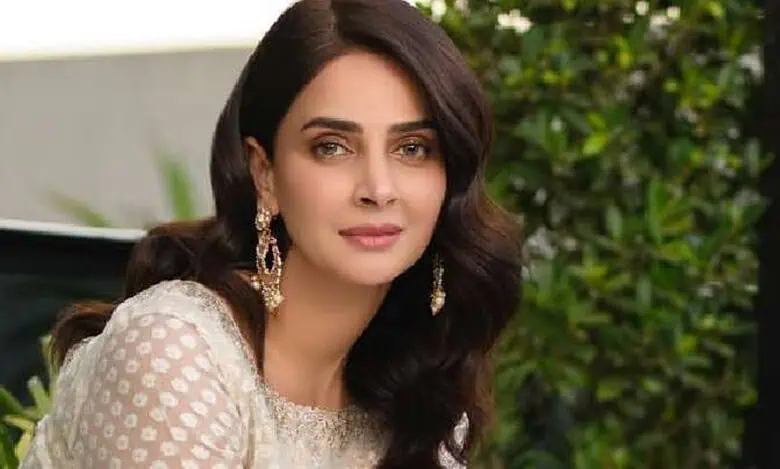
The Untold Story of Saba Qamar and Aamina Sheikh’s Iconic Friendship

Saba Qamar

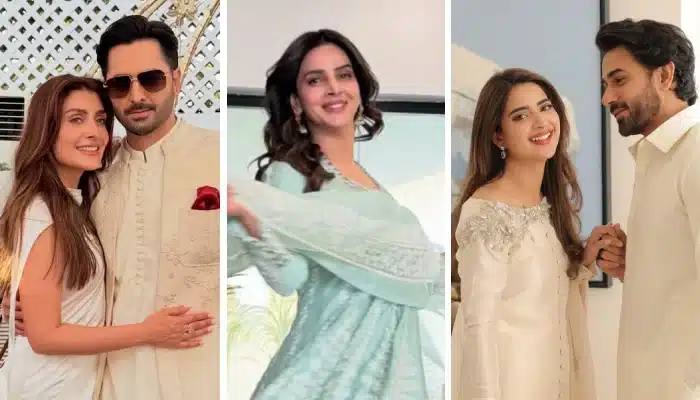
On Monday, Saba Qamar and Aamina Sheikh showcased their wedding glam in an Instagram Story, posing together at one of Kubra Khan and Gohar Rasheed’s wedding events. “Roll out the carpet, we are coming,” Saba wrote, addressing the newlyweds.

Saba dazzled in a peach sari, while Aamina stunned in a gleaming white ensemble. Both actors styled their hair elegantly—Saba in a sleek bun and Aamina in a traditional braid.

Beyond their impeccable fashion, Saba and Aamina stood out for their enduring friendship. Time and again, these on-screen sisters have embodied true best-friend goals.

A Bond That Began in Maat

Fans first saw their on-screen chemistry in the 2011 drama serial Maat, where they played sisters with clashing ambitions. Though their characters were at odds, the show sparked a lasting real-life friendship.

Reflecting on their bond, Saba praised Aamina in a 2018 interview with The Express Tribune. “Working with Aamina Sheikh has been a wonderful experience. She is one of the most professional and hardworking actors in our industry,” she shared.

Heartfelt Reunions and Shared Memories

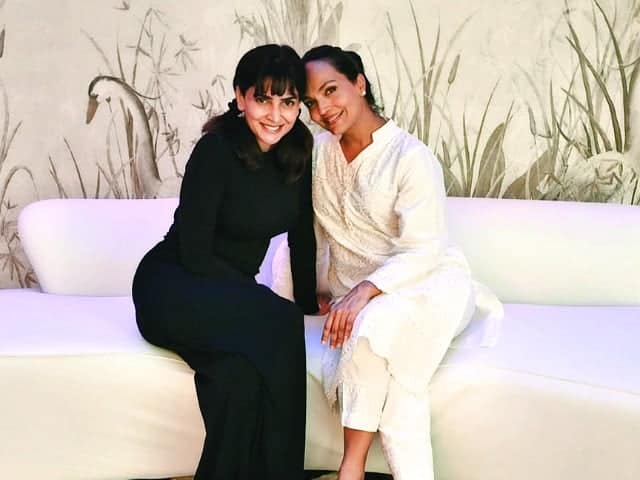
In August last year, Saba dedicated a heartfelt Instagram post to Aamina, where they twinned in black and white outfits. She expressed gratitude for their time together, writing, “Your presence brought warmth and joy to my home, and our conversations left me inspired.”

Admiring Aamina’s talent and kindness, she continued, “It’s rare to meet someone so genuine, and I feel fortunate to have you as a friend. Looking forward to creating more beautiful memories together.”

In the post, the two enjoyed a cozy girls’ day at Saba’s home, where they posed playfully, forming a heart with their hands. Saba kept it casual in a white t-shirt with summer bangs, while Aamina exuded elegance in a white kurta.

A Reunion After 14 Years

In January, the duo thrilled fans by announcing their on-screen reunion in Case #9. Saba and Aamina embraced in a long, swaying hug, twinning in sunglasses and crop tops. “Saba, we made it. We’re here,” Aamina said, clapping hands with her bestie. “We’re here to slay.”

Aamina also reciprocated the love last August, praising Saba’s fearless performance in Maat. “Life and screen shine when there is mutual respect and admiration,” she wrote. “Aimen, my character in Maat, wouldn’t have made the same impact without Saba’s bold and uninhibited portrayal of Saman. She was the true yin to my yang.”

Looking ahead, Aamina expressed excitement for their journey. “Now in life, we pick up where we left off, always grateful, always joyful for our shared success.”

Also Read: Saba Qamar Finds Staying in Karachi for Three Months Challenging

Featured

Eid 2026 Fashion Was Powerfully Individual – Here Are the Looks That Defined It

This Eid, fashion feel like a runway dictated by trends – a quiet, confident understanding of style took center stage, where nostalgia met modern flair, and individuality spoke louder than any passing fad. From fluid florals to monochromes, this year’s festive wardrobes reflected personality over prescription and if there was one thing everyone agreed on, it was there’s no single way to dress for Eid anymore.

Leading the style narrative was Hania Aamir, who made a compelling case for saris on Eid. Her maroon blouse paired with a cream-and-gold lawn sari struck a delicate balance between festive and effortless. But it was the understated details that elevated the look – a soft, barely-there makeup finish, a simple braid, and thoughtfully chosen bangles in maroon, gold, and white that steered clear of predictable trends. Her mehendi, adorned with tiny stud-like accents, added a subtle nod to what’s quietly trending online, making the entire look feel current yet unforced.

Meanwhile, Saboor Aly brought back the frock-style kameez with a refreshing twist. Her black-and-white ensemble blended structure with playfulness, anchored by a rust gota-embroidered neckline that drew the eye without overwhelming the outfit. Paired with a loose black shalwar featuring a bold border, the look felt cohesive yet relaxed. Finished with braided hair, statement jhumkas, and minimal makeup, it was festive fashion with comfort in mind—perfect for a day that moves between celebration and quiet family moments.

Softness took a more expressive turn with Yumna Zaidi, whose pale yellow floral kameez captured the essence of spring. A sheer net dupatta with delicate sequins added lightness, while deep green khussas grounded the outfit. Her accessories told a layered story – Kashmiri churis paired with colorful glass bangles created visual interest, but it was her mehendi, carrying a message of “Free Palestine, No To War,” that gave the look emotional weight. Subtle in palette, bold in meaning—it lingered long after first glance.

Breaking away from the expected festive palette, Sadaf Kanwal embraced an all-black ensemble that felt both dramatic and refined. Her silk frock-style kameez, complete with flowing sleeves and understated embellishments, caught the light just enough. The standout detail, however, was the silhouette—a hybrid shalwar-trouser that played with volume and structure, offering a modern take on traditional form. It was a reminder that Eid dressing doesn’t always have to follow the rules to feel right.

Elegance, in its purest form, came courtesy of Saba Qamar. Her pastel green peshwas-style kameez was a lesson in restraint—white accents and emerald detailing added richness without excess. Paired with classic jhumkas and a delicate nath, the look existed in that perfect space between bridal and minimal. It didn’t demand attention, but it certainly held it.

Then there was Zara Noor Abbas, who infused playfulness into her cream ensemble, what could have been a standard neutral outfit turned whimsical with bold pink embroidered hearts—one at the hem, another at the neckline. Rust-gold detailing added warmth, while kundan pearl jewellery, including a teeka and stacked bangles, brought polish to the look. It was equal parts charming and composed.

Read more: Celebrities call for joy, compassion this Eid

Continue Reading

Featured

Atiqa Odho on Talha Anjum’s flag row: Art has no borders, but self-respect matters

Atiqa Odho
Atiqa Odho thinks art shouldn’t be limited by borders, but self-respect matters too — and she’s sharing her thoughts on the controversy where rapper Talha Anjum draped an Indian flag over his shoulders at a Kathmandu concert last November.
Odho was a guest on The Current Podcast when host Ismaeel Qasim asked about the incident. She said she’s “really torn” because it involves two things she believes in: agreeing with Anjum’s view that “art has no borders,” but also thinking “you have to treat others how they treat you.”
She complained that politics gets in the way of art. She said Indian celebrities who visit Pakistan are “treated like royalty” and get lots of love and respect, but “they won’t let our films play in their cinemas.”
“It has to be a two-way relationship,” she stressed several times during the interview.
As a former head of Pakistan’s United Producers Association (UPA), Odho said the group banned Indian films in Pakistan as a tit-for-tat move — because “cultural exchange can’t be one-sided.” She regretted that a great film like Maula Jatt didn’t get shown in India due to politics.
She recalled a time when she was UPA chair: India’s film association said they’d fine any producer 5 million INR (to go to the Indian Army’s welfare fund) for hiring Pakistanis. Back then, Pakistani actors like Fawad Khan and Mahira Khan were working in Bollywood. Odho said this move sent a terrible message — that Pakistani artists are like terrorists, and they have to “pay for the right” to work there.
She explained why India does this: Pakistani content on Indian screens “breaks their story that Pakistan only makes suicide bombers” — because it shows people there that Pakistan has art and culture too.
Odho said both countries have so much talent. “If our musicians, actors, and filmmakers work together, we could take the world by storm,” she said. She hopes things open up again someday, but “it has to be a two-way street.”
When the host noted that Indian fans love Pakistani artists (even if the Indian government doesn’t), Odho agreed: “We have lots of fans in India, and we want to make them happy. But people here reacting the way they are — it’s understandable given the current situation.” She added that Anjum made a choice and “will have to face the consequences.”
Earlier in the show, the host asked about a TV segment where host Rehan Tariq shamed TikTok creator Warda Malik for her content. Odho said everyone has the right to post what they want (as long as it’s legal) — “none of us are morality police.”
“If you find something really offensive, there are proper ways to handle it,” she said. “Government agencies and social media platforms have rules to take down or ban things.” She added that no one is perfect, and people have different ideas of what’s moral. She pointed to a recent case where a woman posted videos of animal abuse — and authorities stepped in, as they should. “These news anchors who humiliate people to act like morality police? They’re just trying to get more views,” she said.

Read more: Shootings Banned at Lahore Schools After Main Manto Nahin Hoon Row: Atiqa Odho

Continue Reading

Featured

Hadiqa Kiani releases much-awaited folk-classical single ‘Challa’

Hadiqa Kiani
Pakistan’s iconic singer Hadiqa Kiani has thrilling news for fans: her highly anticipated new track Challa is officially out today, December 11, on Sufiscore and all major digital music platforms.
In a reel shared by the star, she opened up about the song’s deep personal and artistic meaning, calling it a long-held dream come true. “I’m overjoyed to share that my new song Challa releases December 11 on Sufiscore and all major digital platforms,” she said. “This timeless folk-classical piece has been performed by countless legends, and I’ve always dreamed of putting my own spin on it—pouring my heart into every note.”
For Kiani, Challa is more than just a cover: “Everyone connects with this song in their own way, but to me, it’s a soul—a spirit that enters the world, journeys through it, and ultimately finds its final destination.”
A beloved Punjabi folk classic, Kiani’s rendition pays tribute to iconic poets like Shiv Kumar Batalvi and Reshma, with music arranged by Irfan Kiani and produced by Sufiscore.
Renowned for her genre-defying versatility, Kiani has carved a decades-long career spanning pop hits, emotional ballads, and folk-inspired melodies, solidifying her status as one of Pakistan’s most cherished and enduring artists. Beyond music, she’s celebrated for her philanthropy and cultural impact: she was awarded the Tamgha-e-Imtiaz (one of Pakistan’s highest civilian honors) in 2006 for her contributions to music, and named to the BBC’s prestigious “100 Women 2024” list for her work as a humanitarian leader.
As a Goodwill Ambassador for the United Nations Development Programme (UNDP), Kiani has led initiatives like Vaseela-e-Raah, which provided critical relief and built homes for flood-affected families in Pakistan—using her platform to uplift communities in need.

Read more: Hadiqa Kiani Earns a Spot in BBC’s 100 Women for 2024

Continue Reading
Advertisement

Trending

Copyright © 2025 PMC Media Group.